Planting
Raspberries grow best in a sunny location, but unlike many fruits, they will also grow successfully in a partially shaded spot. However, the more sun, the more fruit!
The planting site should have rich and well-draining soil, great air circulation, and shelter from the wind. Avoid a wet and windy area, as raspberries do not like to stand in water or totally dry out.
Every year, feed your raspberry plants with a couple of inches of compost or aged manure; dig it into the soil a couple of weeks before planting. (A good ratio is about 3½ cubic feet of compost per 100 square feet.)
Plant your berries far from wild-growing berries; otherwise, you risk spreading wild pests and diseases to your cultivated berry plants.
When to Plant Raspberries
- Start with 1-year-old raspberry canes from a reputable nursery. Plant in early spring once the ground thaws out and can be worked (see your local frost dates).
- In mild areas, you could also plant in late autumn to give the plants a head start.
- Plant potted transplants in the spring after the threat of frost has passed.
How to Plant Raspberries
- Before planting, soak the roots for an hour or two.
- Dig a hole that is roomy enough for the roots to spread. If you’re planting multiple bushes, it’s easiest to dig a trench.
- Whether you’re planting bare-root or potted plants, keep the crown of the plant 1 or 2 inches above the ground.
- Canes should be spaced 18 inches apart, with about 4 feet between rows.
- Fill the soil back in, and tamp it down with your foot.
- Once the canes are planted, cut them down to 9 inches tall to encourage new growth. (Yes, it will look like a broken branch sticking out of the ground!)
- Depending on your plant variety, you may need to fashion a support to hold up the canes, as many grow to head height. A trellis or a fence are good options. If you have a row, drive in two 6-foot posts at the end of the row and stretch galvanized wire between the posts. Summer-fruiting raspberries need three horizontal wires, and the fall types could do with two wires.
Check out this video to learn how to plant raspberries.
Growing
- Mulching is important throughout the season to conserve moisture and suffocate weeds. Keep a thick layer of mulch surrounding plants at all times.
- Water 1 inch per week from spring until after harvest. Regular watering is better than infrequent deep soaking.
- Keep your raspberry bushes tidy by digging up any “suckers” or canes that grow well away from the rows; if you don’t dig them up, they’ll draw nutrients away, and you’ll have fewer berries next year.
- If you wish, you can replant the suckers, and you’ll have new plants! Dig them up, set them in a fresh area of prepared ground, and water them after planting.
How to Prune Raspberries
Prune summer-fruiting raspberries immediately after you’re done picking! Cut only the canes that produced berries back down to the ground.
(Remember, this plant produces berries on 2-year-old canes while 1-year-old canes grow right beside them. You shouldn’t have trouble telling which is which: The older canes have brown stems, and the young ones are still green. Prune only the older ones—the ones that have finished their fruitful year.)
Tie the remaining canes to the supporting wires with garden string. There should not be any more than one cane every four inches of wire, so cut down additional canes.
Ever-bearing or fall-bearing raspberries
- This is easy. Just cut all canes back to the ground in late winter before growth begins in the spring. They give fruit on canes that are in their first year of growth, after which there is no reason to keep them. Mow them to the ground or use pruning shears for a small patch.
- Clean up all debris—diseases and pests overwinter.
- Pruning is only required during the growing season if you want to keep uniform order. Dig or pull up new canes that grow well away from the rows. If your raspberry canes are disease-free, you can transplant them to raise more plants.
Note: The above assumes you are harvesting a fall crop. To get both fall and following summer crop, do not remove the primocanes that produced the fall crop. Prune them back in spring to about 12 inches above the support, or to the last visible node that had fruit, cutting off the dead tips.

Harvesting
- All varieties will begin to produce fruit in their second season. In some cases, ever-bearers may bear small berries in their first autumn.
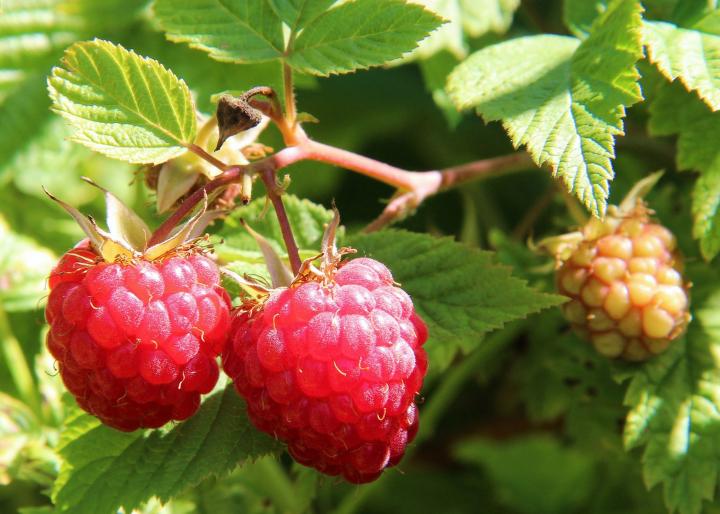
- In early summer, berries will ripen over about 2 weeks. You will need to pick berries every couple of days!
- Try to harvest berries on a sunny day when they are dry.
- Gently pull raspberries away from their central plug once they’re richly colored all over. They should come away easily. Don’t tug too hard on your raspberries when picking. A ripe raspberry will leave the vine willingly.
How to Store Raspberries
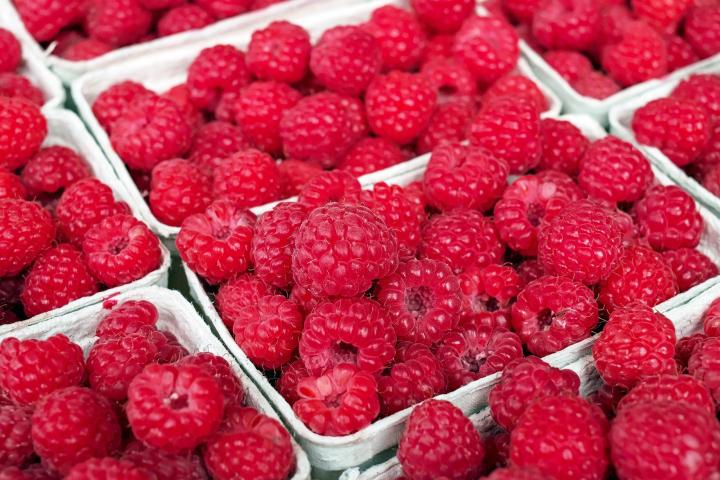
- Raspberries won’t keep for long, so enjoy them soon after picking them!
- They can be kept refrigerated for about 5 days. Don’t wash the berries after picking unless you’re going to eat them straight away. They will grow moldy and mushy if not kept dry in storage. If you do need to wash them, let them air dry completely before storing them.
- Raspberries can be frozen! As with freezing blueberries, make a single layer of berries on a cookie sheet. When frozen, place into airtight bags. Use on waffles, in cereal, or whenever you need a refreshing, healthy snack!
Types
There are many, many raspberry varieties available today—and each one is unique! Ask your local garden center or cooperative extension service which raspberry varieties are best suited for your area. Here are a few to get you started:
- ‘Canby’: red berries; summer-bearing; nearly thornless; recommended for New England, Upper Great Lakes, and Northwest
- ‘Heritage’: red berries; ever-bearing; recommended for the Mid-Atlantic and Ohio Valley
- ‘Plainsman’: red berries; ever-bearing; does well in higher altitudes (the Rockies and High Plains)
- ‘Fallgold’: yellow berries; ever-bearing; recommended for the Upper Midwest and Canada
- ‘Double Gold’: yellow berries tinged with peach; ever-bearing; better for warmer areas, as the fall crop can be quite late
- ‘Royalty’: purple berries; summer-bearing; better for warmer areas
- ‘Jewel’: black berries; summer-bearing; disease-resistant; great for warmer areas
- ‘Black Hawk’: black berries; summer-bearing; heat- and drought-tolerant
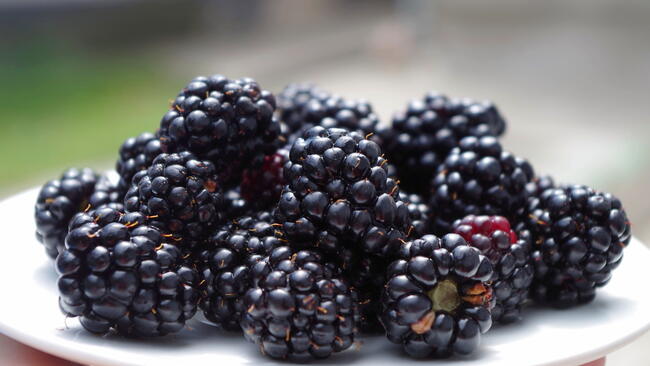
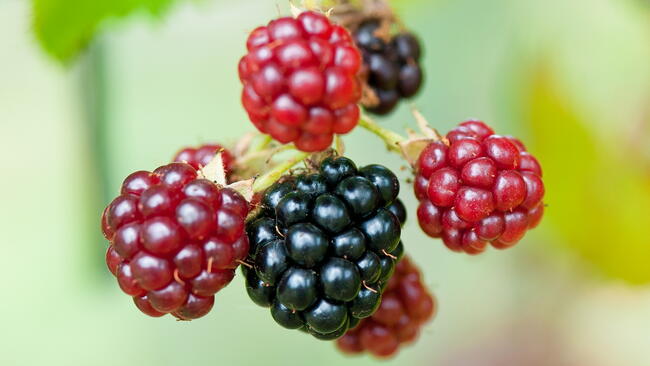
Tired of raspberries? Try your hand at growing blackberries, blueberries, or strawberries instead!



Comments

Hi Tracy,
Congratulations on your new house! It wouldn't hurt to mound straw, mulch, or compost around the base of the plant. However, it may be going through it's natural life cycle: Raspberry plants are biennials. Raspberry plants grow in long canes, growing during the first year and producing fruit during the second. After the two years, they die, leaving their seeded fruit or runners to continue the cycle. Your plant may be in its second year of life.
Unfortunately, your symptoms sound like a textbook case of Verticillium wilt—a soil-borne fungal infection that causes leaf drop, stem death, and sub-par fruiting in a great number of fruits and vegetables. Sadly, nothing can be done for an infected plant, and Verticillium wilt is capable of remaining in the soil for many years, so we would recommend planting any new raspberry plants as far as possible from the diseased patch.
When you remove the infected plant, consider replacing it with Verticillium-resistant plants, like irises, lilies, carrots, beans, or lettuce. A number of other common vegetables and flowers are also resistant.
Hi, Lee: Thank you for this question and your detailed description, including history. It seems as though one of two things is happening here, or perhaps both. We don't know the condition of your canes, but your description of the leaves can indicate a disease or infestation of some sort. Assuming that you're not noticing any insect pests, this would leave fungi and all manner of soilborne afflictions, of which there are many. Perhaps--by coincidence--your straw left something behind. More likely, though--and here's #2--your canes simply became too wet, a condition that itself encourages fungi and that is encouraged by the wood chips, which act like a sponge. If it were us, we would do three things: (1) pull out and dispose of the wood chips, to get rid of both the sponge and any bad things in them; (2) try to find an organic fungicide that is safe for edible produce; and (3) contact your local USDA county extension service to see if they have more localized advice. We would also add a fourth--making sure that your soil drainage is OK--but your previous success with these plants would seem to indicate that this is not a problem. Just for the record, we have had two large and prolific patches at some distance from each other for decades and have never used mulch on them. Thanks again, and good luck!
Lucky you! Freeze them this way: Put a single layer on a sheet pan. Put that into the freezer. When the raspberries are frozen transfer them to an airtight container or bag and return them to the freezer until you're ready to use them. Repeat as needed with each harvest. They may clump a bit over time but they should not get mushy until thawed but even then some will retain some shape. Frozen or fresh, you can cook them up; here are are few recipes (including one with a sauce you can make and freeze): http://www.almanac.com/search/site/raspberries
If none of these ideas catch your fancy, call us and we'll take bushels of those berries off your hands!
- « Previous
- 1
- 2
- …
- 10
- Next »

You must be doing everything right, Neil! You could certainly thin out your raspberry patch by giving some away. Raspberries spread by runners, so lift them with plenty of root. And remember, it would take while for one to be many, so maybe give friends a few person.