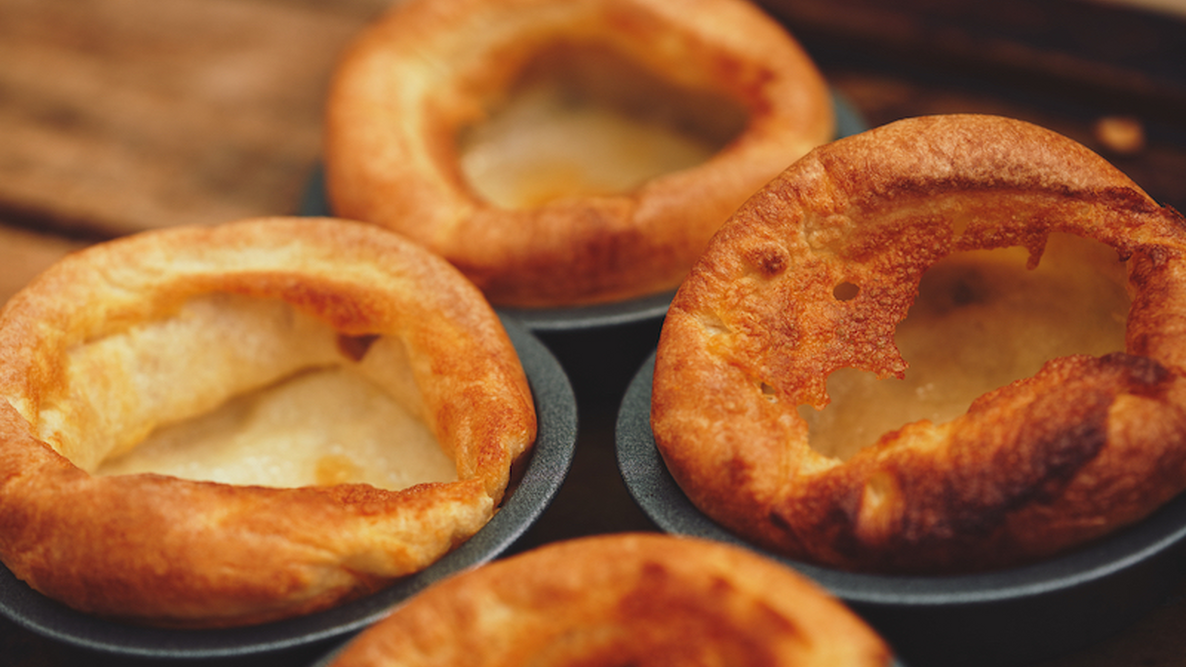
Yorkshire pudding is a cross between a dinner roll, popover, and soufflé. It’s the classic English side dish at the traditional “Sunday roast”—the perfect gravy-absorbing companion. In the U.S., Yorkshire pudding is a hit at Christmastime, served with roast beef or sometimes roast chicken.
Note: The word “pudding” in the U.S. means dessert. However, a Yorkshire Pudding is a puffed pastry baked with meat drippings. It’s not airy and hard like a popover but more of a soft, eggy side dish to the roast beef.
Named after the northern county in England, Yorkshire pudding was devised by cooks to use the fat that dropped into the dripping pan to cook a battered pudding while the meat was roasted. The Yorkshire pudding was served as a first course alongside a thick gravy; the low-cost ingredients dulled the appetite so that diners would not eat as much of the more expensive meat in the next course.
After the roast is finished, the beef drippings are added to the bottom of a large roasting pan or a large (12-cup) muffin tin. The oven’s heat (or fire) makes the pudding rise, and fat seeps in, so it puffs up. The Royal Society of Chemistry of England says, “A Yorkshire pudding isn’t a Yorkshire pudding if it is less than four inches tall.” That might be a “tall” challenge, but the idea is certainly to rise until puffed and golden brown.

Comments