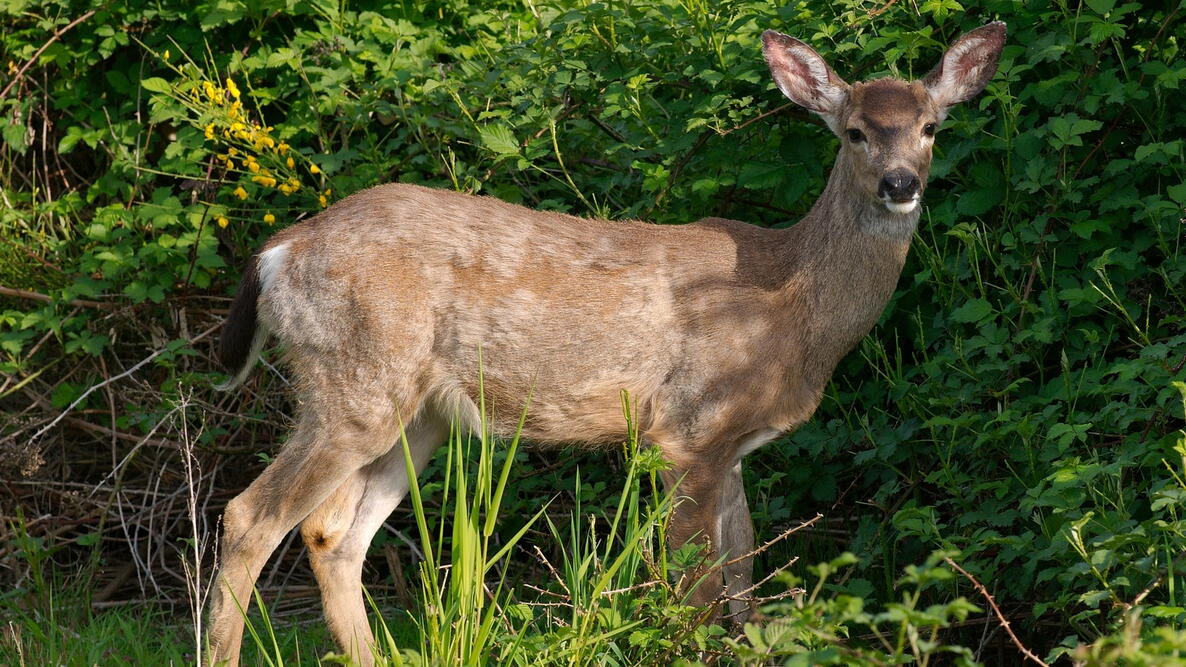
Are deer eating your garden plants? Choosing deer-resistant plants is one of the best ways to protect your flowers, shrubs, and landscaping. While no plant is completely deer-proof, many plants—such as salvia, lavender, poppies, snapdragons, and sweet alyssum—are far less appealing to hungry deer.
In this guide, we share the best deer-resistant plants, flowers deer avoid, and tips to keep deer out of your garden all season long.
Are Any Plants Truly Deer-Proof?
Let’s be honest: no plant is 100% deer-proof. When food is scarce—especially from October through February—deer will eat almost anything.
However, deer prefer tender, fertilized, and easy-to-digest plants like:
Think of it this way: if deer have access to their favorite foods, they usually leave tougher, bitter, or fragrant plants alone.
The goal is simple: plant what deer dislike so they walk past your garden.

According to researchers from the University of Rhode Island, who have studied white-tailed deer damage to nurseries, deer seem to prefer plants that have been fertilized to those that haven’t.
Why Deer Avoid Certain Plants
Deer tend to avoid plants with these characteristics:
- Strong scents (lavender, sage, rosemary)
- Toxic leaves (daffodils, foxglove)
- Fuzzy or prickly textures (lamb’s ear)
- Bitter taste (herbs and aromatic plants)
- Tough or leathery foliage
These natural defenses help protect your garden without chemicals or fencing.
Most Deer-Resistant Plants (Quick List)
Some of the most reliable deer-resistant plants include:
These are excellent choices for beginner gardeners dealing with deer problems.

Deer-Resistant Plants for Shade
If your garden has limited sunlight, these plants perform well in shade and resist deer browsing:
- Bleeding heart (Lamprocapnos spectabilis)
- Astilbe
- Ferns
- Pachysandra
- Wild ginger
- Hellebore
- Lily of the valley
These plants add color and texture to shaded areas while discouraging deer.

Deer-Resistant Plants for Sun
For sunny gardens, consider these reliable options:
- Coreopsis
- Liatris (Blazing Star)
- Echinacea (Coneflower)
- Salvia
- Shasta Daisy
- Lavender
- Zinnias
- Lantana
Many of these also attract butterflies and pollinators.
Deer-Resistant Herbs
Herbs are some of the best natural deer deterrents due to their strong scent.
Planting herbs along garden edges can help protect other plants.
Deer-Resistant Shrubs and Trees
For landscaping and structure, try:
These shrubs provide long-term protection and visual appeal.
75+ Deer-Resistant Plants
Below is a complete list of deer-resistant plants, including flowers, herbs, shrubs, and trees. Use this chart to quickly find plants that work best for your garden. Again, keep in mind that the first rule in deer-proofing is that there are no completely deer-proof plants.
| Common Name | Botanical Name | Plant Type | Sun/Shade |
|---|---|---|---|
| Achillea | Achillea filipendulina | Perennial | Sun |
| Ageratum | Ageratum houstonianum | Annual | Sun |
| Allium | Allium sp. | Perennial | Sun |
| Allegheny Serviceberry | Amelanchier laevis | Shrub/Tree | Sun/Shade |
| Anise | Pimpinella anisum | Annual/Herb | Sun |
| Autumn Crocus | Colchicum sp. | Perennial | Sun/Shade |
| Baby’s Breath | Gypsophila sp. | Perennial | Sun |
| Basil | Ocimum basilicum | Annual/Herb | Sun |
| Bayberry | Myrica pensylvanica | Shrub | Sun |
| Bearded Iris | Iris sp. | Perennial | Sun/Shade |
| Bee Balm | Monarda didyma | Perennial | Sun |
| Black-Eyed Susan | Rudbeckia sp. | Perennial | Sun |
| Blue Fescue | Festuca glauca | Perennial | Sun |
| Blue Mist Shrub | Caryopteris clandonensis | Shrub | Sun |
| Bluebell | Endymion sp. | Perennial | Shade |
| Bleeding Heart | Lamprocapnos spectabilis | Perennial | Shade |
| Borage | Borage officinalis | Annual | Sun |
| Boxwood | Buxus sempervirens | Shrub | Sun/Shade |
| Broom | Cytisus sp. | Shrub | Sun |
| Butterfly Bush | Buddleia sp. | Shrub | Sun |
| Calendula | Calendula sp. | Annual | Sun |
| Catmint | Nepeta sp. | Perennial | Sun |
| Cleome | Cleome sp. | Annual | Sun |
| Common Foxglove | Digitalis purpurea | Perennial | Shade |
| Common Lilac | Syringa vulgaris | Shrub | Sun |
| Coreopsis | Coreopsis verticillata | Perennial | Sun |
| Corydalis | Corydalis sp. | Perennial | Shade |
| Crown Imperial | Fritillaria imperialis | Perennial | Sun |
| Daffodil | Narcissus sp. | Perennial | Sun/Shade |
| Daphne | Daphne sp. | Shrub | Sun/Shade |
| Echinacea | Echinacea purpurea | Perennial | Sun |
| Endymion | Endymion sp. | Perennial | Shade |
| Fern | Osmunda | Perennial | Shade |
| Forget-Me-Not | Myosotis sp. | Annual/Perennial | Shade |
| Foxglove | Digitalis purpurea | Perennial | Shade |
| Garlic | Allium sp. | Perennial | Sun |
| Garden Sage | Salvia officinalis | Perennial/Herb | Sun |
| Globemallow | Echinops ritro | Perennial | Sun |
| Heliotrope | Heliorope arborescens | Perennial | Sun |
| Horehound | Marrubium vulgare | Perennial/Herb | Sun |
| Hyssop | Hyssopus officinalis | Perennial/Herb | Sun |
| Jack-in-the-Pulpit | Arisaema triphylum | Perennial | Shade |
| Juniper | Juniperus | Shrub/Tree | Sun |
| Lantana | Lantana sp. | Perennial/Shrub | Sun |
| Lavender | Lavandula sp. | Perennial/Herb | Sun |
| Lemon Balm | Melissa officinalis | Perennial/Herb | Sun/Shade |
| Leucanthemum Daisy | Leucanthemum x superbum ‘Becky’ | Perennial | Sun |
| Lily of the Valley | Convallaris majalis | Perennial | Shade |
| Russian Sage | Perovskia atriplicifolia | Perennial | Sun |
| Salvia | Salvia x sylvestris | Perennial | Sun |
| Snapdragon | Antirrhinum majus | Annual/Perennial | Sun |
| Snow-on-the-Mountain | Euphorbia marginata | Annual | Sun |
| Snowdrops | Galanthus nivalis | Perennial | Shade |
| Spider Flower | Cleome sp. | Annual | Sun |
| Statice | Limonium latifolium | Perennial | Sun |
| Sweet Alyssum | Lobularia maritima | Annual | Sun |
| Thyme | Thymus sp. | Perennial/Herb | Sun |
| Tulip | Tulipa sp. | Perennial | Sun |
| Winter Aconite | Eranthus hyemalis | Perennial | Shade |
| Winterberry Holly | Ilex verticillata | Shrub | Sun/Shade |
| Wood Fern | Dryopteris marginalis | Perennial | Shade |
| Wood Sage | Salvia x sylvestris | Perennial | Sun |
| Yucca | Yucca | Perennial | Sun |
| Zinnia | Zinnia | Annual | Sun |
Credit: Outwitting Deer by Bill Adler Jr.
Note: Even “resistant” varieties can be vulnerable in the first few weeks after planting when their leaf tissue is especially nitrogen-rich. If you have major deer problems, we recommend spraying new plants with a deer repellent for 3 to 4 weeks after planting to prevent them from being nibbled on and damaged. Even if they are feasted on, as long as the root systems of the plants are not damaged, the plants should survive.
How to Design a Deer-Resistant Garden
- Plant herbs around borders
- Avoid hostas
- Use shrubs as barriers
- Group resistant plants
- Protect new plants
Final Gardening Tip: Choosing deer-resistant plants is one of the easiest ways to protect your garden naturally. By planting fragrant herbs, tough perennials, and unpalatable flowers, you can enjoy beautiful blooms without worrying about deer damage.
Want more ways to keep deer out of your garden? Click to read more tips on how to deter deer in the garden!
What are your favorite deer-resistant plants?
Frequently Asked Questions
-
What plants are most deer-resistant?
Lavender, salvia, daffodils, boxwood, and Russian sage are among the most deer-resistant plants.
-
What flowers do deer hate the most?
Deer tend to avoid strongly scented or toxic flowers like foxglove, poppies, lavender, and daffodils.
-
Are there any deer-proof plants?
No plant is completely deer-proof, but many are highly resistant.
-
Do deer eat hostas?
Yes, hostas are one of deer’s favorite plants.
-
What smells keep deer away?
Strong scents like lavender, sage, rosemary, and mint often deter deer.
-
Will deer eat plants in winter?
Yes, deer browse more heavily from October to February, when food is scarce.

More Like This

Not at all. This list is only geared to protecting nursery plantings.
It's true that no plant is deer-resistant. There are just some plants that are deer candy and some plants deer would select before others. Black-eyed susans are rated a "B" by cooperative extensions, meaning "seldom severely damaged," but there are other plants that are "rarely damaged" and would be rated an "A." Perennial flowers aren't as common as other landscape plants but some good choices of perennials include: Bleeding Hearts, Forget-me-nots, Irises, Lavender. and Lenten Rose. Of course, most herbs are rarely damaged, too, so it's a good idea to mix in basil.
- « Previous
- 1
- 2
- …
- 10
- Next »

Comments