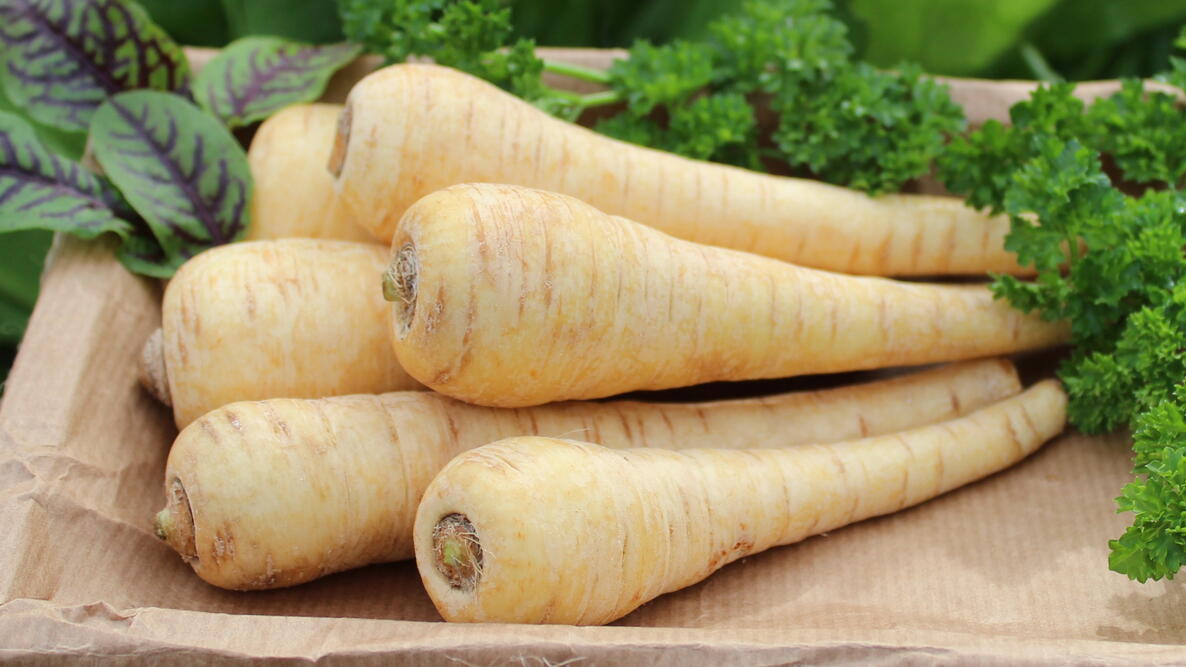
Planting
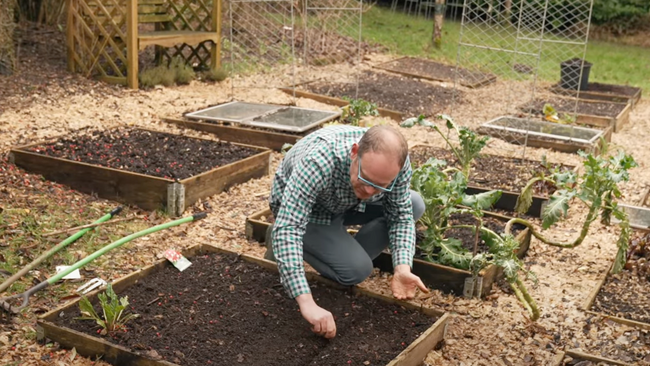
Plant parsnips in a sunny area with loose soil that drains well and is free of rocks. As with carrots, clay or compacted soils can cause parsnip roots to be thin and misshapen. Make sure the area is clear of weeds. Loosen the soil to a depth of 12 to 15 inches and mix in a 2- to 4-inch layer of compost or aged manure for fertility.
When to Plant Parsnips
Parsnips need a long growing season, so sow seeds as soon as the soil is workable in the spring. Parsnip seeds will germinate in soil temperatures as low as 48°F (9°C), but ideally soil at 50º to 54ºF (10° to 12°C) will speed germination.
How to Plant Parsnips
Don’t plant where sod grew in the previous season. Excess nitrogen in the soil will cause overabundant top growth and poor root development. Consider doing a soil test.
- Always sow fresh seed. Parsnip seeds do not store well, and seeds that are more than a year old will have a reduced germination rate.
- Sow seeds directly in the garden.
- Sow seeds 1/2 inch deep, 1 inch apart, in rows 18 to 24 inches wide.
- Tip: Sow radish seeds in between your parsnip seedings. Radishes will grow quickly, marking the row and breaking the dirt’s crust for the parsnips.
- Parsnips are slow to germinate. Seedlings typically emerge in 2 to 3 weeks, or longer in soil temperatures below 50°F (10°C). To hasten the process, keep the soil moist.
- Tip: Another way to speed up germination is to start by soaking paper towels or cotton wool pads. Place them on a saucer and press papery parsnip seeds into them. Keep the seeds warm (50º to 54ºF) and watch for little white roots to appear. Then sow as described. Discard any seeds that fail.

Harvesting
Parsnips mature in about 16 weeks after planting, depending on the variety. Harvest when roots are at least 1 inch in diameter.
When exposed to near-freezing temperatures for 2 to 4 weeks in the fall/early winter, the starch in the root changes into sugar, resulting in a strong, sweet, unique taste.
- Leave your parsnips in the ground for a few frosts, but harvest before the ground freezes.
- Or leave them in the ground for the entire winter, covered with a thick layer of mulch. Harvest immediately after the ground thaws in the spring, before top growth starts. If a flower stalk develops, roots may turn woody.

How to Store Parsnips
Before storing parsnips, trim foliage down to 2 to 3 inches. Store parsnips between 32° and 35°F (0° and 2°C), with a humidity of 90 to 95%. For longer-term storage (4 to 6 months), store roots in slightly damp sand, sawdust, or leaves.
Types
Choose short-root varieties for soil that is shallow, heavy, and/or contains a lot of rocks.
- ‘All-American’: Tapered, 10- to 12-inch white roots; high sugar content; stores well
- ‘Harris Model’: Smooth, tapered, 10-inch white roots, free of side roots
- ‘Hollow Crown’: Mild, 12-inch white, fine-grain roots; flavor improves after frost
- ‘Kral Russian’: Heirloom; beet-shaped root; good for shallow or heavy soil.

More Like This
Comments

If you bought parsnip seeds to grow as food, you have nothing to worry about. However, wild plants resembling parsnips should not be taken for food except by persons who are skilled in identifying both the poisonous and nonpoisonous kinds. Parsnips (Pastenica sativa) are not poisonous at any time during the first growing season nor after the roots have been left in the soil over winter. There is no evidence that parsnip or other edible roots that go through the winter in the soil, even if they freeze, become poisonous.

Hi Janice, It is unlikely that your parsnips could survive that cold a winter in the ground. Even in Minnesota the extension office recommends harvesting parsnips in the fall after a few frosts and storing them in a root cellar for the winter. You could always leave a few in the ground and give it a try!
- « Previous
- 1
- 2
- …
- 10
- Next »

Perhaps the roots did not have enough humidity? Parsnips do best when stored in an area that is around 32 to 35 degrees F, and 90 to 95 percent humidity. Be sure to trim off the leaves, down to about 2 to 3 inches, before storing the roots. For long-term (between 4 and 6 months), store the roots in slightly damp sand, sawdust, or leaves.