Planting
When to Plant Tomatoes
Tomatoes are long-season, heat-loving plants that won’t tolerate frost, so wait until the weather has warmed up in the spring. See our Planting Calendar for when to start tomatoes in your location.
If you are starting tomatoes from seed, sow indoors 6 weeks before the last expected spring frost date in your area. Sow seeds 1/2 inch deep in small trays. Plant seedlings outdoors about 2 weeks after that date or when temperatures stay in the mid-50°F range both day and night. See our full guide to starting tomato seeds indoors.
If you have a long enough growing season, it is also possible to direct-seed tomatoes in the garden soil (1/2 inch deep)—but not before the soil is at least 55°F. Note that 70°F soil is optimum for maximum germination within 5 days.
Where to Plant Tomatoes
Select a site with full sun! In northern regions, 8 to 10 hours of direct sunlight are preferred. In southern regions, light afternoon shade (natural or applied, e.g., row covers) will help tomatoes to survive and thrive. Dig the soil to about 1 foot deep and mix in aged manure and/or compost. Give it 2 weeks to break down before planting.
Also, choose a space where tomatoes (and members of their family, especially eggplants, peppers, and potatoes) have not grown in the previous couple of years. See tips on crop rotation.
Hardening Off Tomatoes
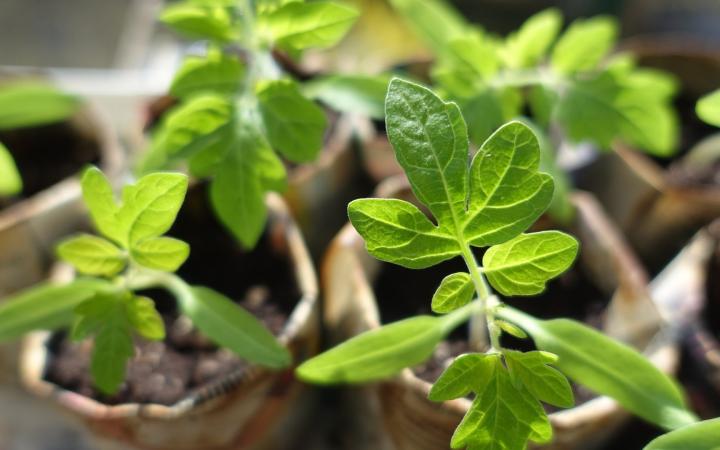
If you’re buying or growing the starter plants, you’ll need to harden off the seedlings for a week before transplanting them into the ground. Set them outdoors in the shade for a few hours on the first day. Gradually increase this time each day to include some direct sunlight. Learn more about hardening off seedlings.
How to Plant Tomatoes
- Transplant your seedlings (or your nursery-grown plants) into the ground outdoors after all danger of frost has passed and the soil is at least 60°F. See our Planting Calendar for suggested transplanting dates.
- Place tomato stakes or cages in the soil when planting. Staking and caging keep developing fruit off the ground (to avoid disease and pests) and also help the plant to stay upright. See instructions on how to build stakes, cages, and tomato supports.
- Optional: When you transplant tomatoes, add a handful of organic tomato fertilizer or bone meal (a good source of phosphorus) to the planting hole. Do NOT apply high-nitrogen fertilizers such as those recommended for lawns, as this will promote luxurious foliage but can delay flowering and fruiting.
- When planting seedlings, pinch off a few of the lower leaves. Here are two ways to set seedlings in the soil:
- Place each root ball deep enough so that the bottom leaves are just above the surface of the soil. Roots will grow all along the plant’s stem underground. Plant seedlings 2 to 3 feet apart. Crowded plants will not get sufficient sun, and the fruit may not ripen.
- Alternatively, lay long, leggy transplants on their sides in trenches 3 to 4 inches deep. Bury the stems up to the first set of true leaves. Roots will develop along the buried stem. If you plant this way, consider setting four tomato plants in compass-point positions (north, south, east, and west). This formation enables you to fertilize and water the plants in the middle.
- Remember to allow enough space for the plants to spread out.
- Water well to reduce shock to the roots.
Growing Tomatoes in Containers
- Use a large pot or container (at least 20 inches in diameter) with drainage holes in the bottom.
- Use loose, well-draining soil (e.g., at least 12 inches of a good potting mix with added organic material).
- A tray of some sort should be placed under the pot to catch any excess water that drains out the bottom.
- Choose determinate types, such as bush or dwarf varieties. Many cherry tomatoes grow well in pots. Taller varieties may need to be staked.
- Plant one tomato plant per pot and give each at least 6 hours of sun per day.
- Keep soil moist. Containers will dry out more quickly than garden soil, so check daily and provide extra water during heat waves.
- Learn more about how to grow tomatoes in containers.
Growing
Watering Tomatoes
- Water in the early morning so that plants have sufficient moisture to make it through a hot day.
- Water generously the first few days that the tomato seedlings or transplants are in the ground.
- Then, water with about 2 inches (about 1.2 gallons) per square foot per week during the growing season. Deep watering encourages a strong root system.
- Avoid overhead watering and afternoon watering. Water at the base/soil level of a plant to avoid splashing water on the leaves (which invites disease).
- Mulch the plants 5 weeks after transplanting to retain moisture, keep soil from splashing the lower leaves, and control weeds. Apply 2 to 4 inches of organic mulch, such as straw, hay, or bark chips.
- To help tomatoes through periods of drought, find some flat rocks and place one next to each plant. The rocks prevent water from evaporating from the soil.
Fertilizing Tomatoes
- You should have already worked compost into the soil before planting and added some bonemeal to the planting hole when transplanting.
- Side-dress plants, applying liquid seaweed or fish emulsion or an organic fertilizer every 2 weeks, starting when tomatoes are about 1 inch in diameter (some folks say golf ball-size). If you are using an organic granular formula such as Espoma Tomato-Tone (4-7-10 or 3-4-6), pull mulch back a few inches and scratch 2 to 3 tablespoons fertilizer around the drip line of the plant. Water in, and replace mulch.
- Continue fertilizing tomatoes about every 3 to 4 weeks until frost.
- Note: Avoid fast-release fertilizers and avoid high-nitrogen fertilizers. As stated, too much nitrogen will result in lush foliage but few flowers and little or no fruit.
Pruning Tomatoes
- If growing vining tomatoes, pinch off suckers (new, tiny stems and leaves between branches and the main stem). This aids air circulation and allows more sunlight into the middle of the plant.
- Gently tie the stems to stakes with rags, nylon stockings, twine, or soft string.
- As a plant grows, trim the lower leaves from the bottom 12 inches of the stem.
Check out this post for even more tomato tips.

Types
The first job is deciding what to grow, and with at least 10,000 different varieties of tomato, there’s certainly plenty to choose from, including cherry tomatoes, paste types, varieties with standard round fruits, and chunky beefsteak tomatoes.
Whatever you grow, they’ll fall into one of two categories: ‘bush’ tomatoes, sometimes called determinate tomatoes, which grow to around 3 feet (1 m) tall, and ‘vining’ tomatoes, also called indeterminate or ‘cordon’ tomatoes, which continue growing to produce fruits on one long stem. Learn more about the difference between determinate and indeterminate tomatoes.
Do you only have a hanging basket? Hey, that’s no problem—there are compact tomatoes for this situation, too.
- Determinate tomatoes, better known as bush varieties, grow 2 to 3 feet tall. These varieties tend to provide numerous ripe tomatoes at one time. They do not put on much leaf growth after setting fruit and tend to fruit for a (relatively) brief period of time. They are generally productive earlier than the vining varieties and not in the latter part of the growing season. Determinate tomatoes do not require staking or caging. These plants are ideal for containers and small spaces. Most paste tomatoes are determinate, which works well for making sauce and canning. Because they produce determinate tomatoes at the same time, they are a good selection for canning.
- Indeterminate tomatoes, better known as vining varieties, produce the largest types of mid- to late-season slicing tomatoes all summer and until the first frost. Because indeterminates experience more leaf growth, their production tends to be spread more evenly throughout the season. Indeterminate tomatoes need staking. They are ideal in large gardens. Most beefsteak and cherry tomatoes are indeterminate.
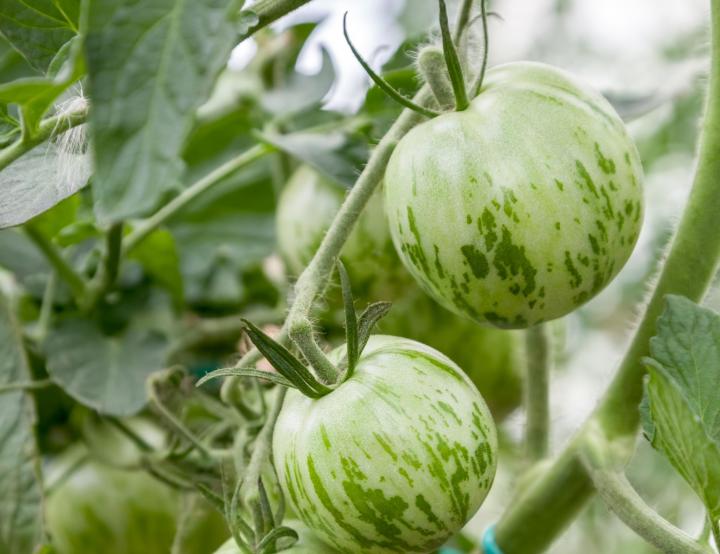
Tomatoes come in a wide range of flavors, colors, and sizes. The choice also depends on how you use this versatile fruit in the kitchen. Cherry tomatoes are great for salads. Beefsteaks are great for sandwiches.
Romas are not usually eaten fresh out of hand but are perfect for sauces and ketchup. See our separate Guide to Growing Roma Tomatoes.
Also, tomatoes can be susceptible to pests and diseases. To avoid problems, choose disease-resistant cultivars whenever possible.
Early Varieties (fewer than 70 days to harvest)
Early-maturing cultivars such as ‘Early Girl’ may be slightly less flavorful but will produce fruit 2 to 3 weeks earlier than mid- or late-season cultivars.
- ‘Early Cascade’: indeterminate trailing plant, fruit in clusters; disease-resistant
- ‘Early Girl’: indeterminate, meaty fruit; produces through the summer
Mid-season Varieties (70 to 80 days to harvest)
- ‘Floramerica’: determinate; disease-resistant; firm, deep red flesh; strong plant
- ‘Fantastic’: indeterminate; disease- and crack-resistant; meaty, rich flavor; heavy yields
Late-season Varieties (80 days or more to harvest)
- ‘Amish Paste’: indeterminate; heirloom; large plum tomatoes, acorn-shaped fruit; juicy, excellent for sauce.
- ‘Brandywine’: indeterminate; heirloom; beefsteak with perfect acid-sweet combination; many variants are available
- ‘Tomato, Roma VF’: determinate; compact Roma tomatoes; resistant to wilts. Meaty interiors and few seeds; heavy-yielding; good for paste and canning.
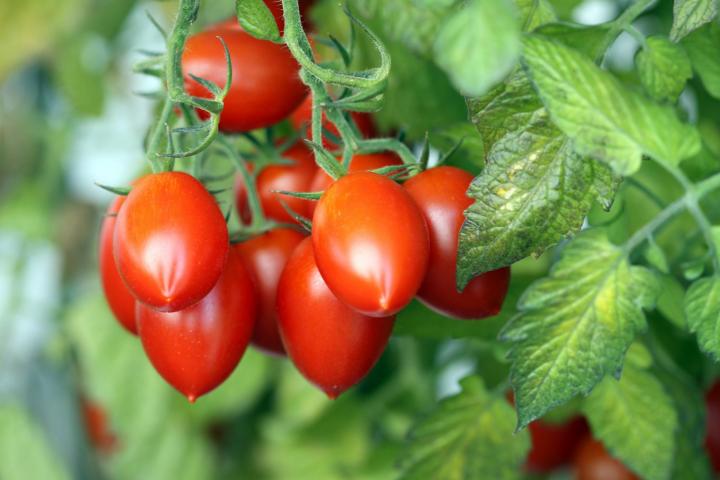
Credit: Ben185/Getty
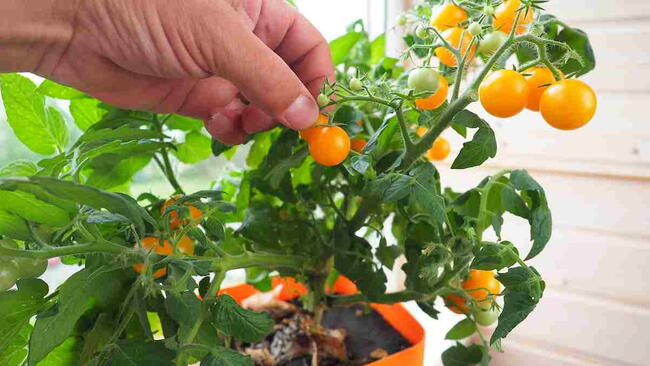
- ‘Sun Gold’: 57 days to maturity; indeterminate; resistant to Fusarium wilt and tobacco mosaic virus; bright tangerine-orange color on grapelike trusses; intensely sweet taste
- ‘Matt’s Wild Cherry’: indeterminate, disease-resistant (including blight)
- ‘Yellow Mini (F1)’: 57 days to maturity; indeterminate; sweet, juicy flavor; compared with other cherry tomatoes, Yellow Mini resists the splitting that is caused by too much rain or inconsistent watering; high resistance to tobacco mosaic virus.
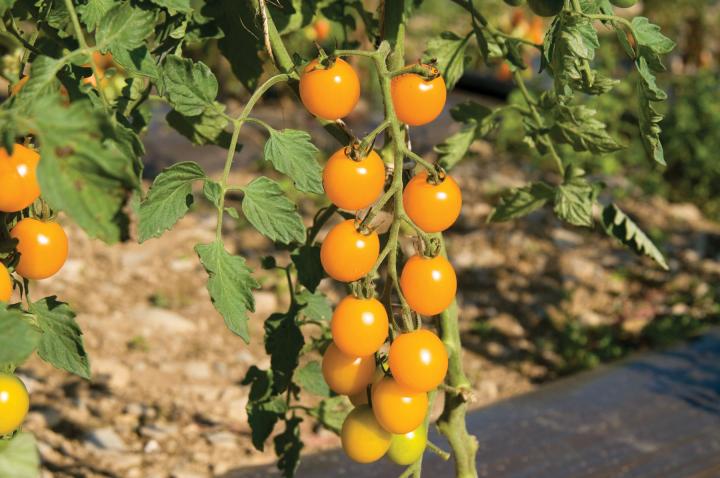
Credit: Johnny Seeds.
Large Tomatoes
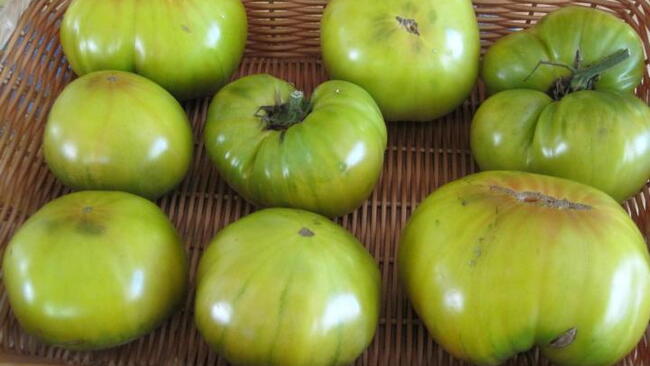
- Beefsteak, Beefmaster, Ponderosa, and Oxheart are noted for their large fruit. However, these larger-fruited types often are more susceptible to diseases and skin cracking.
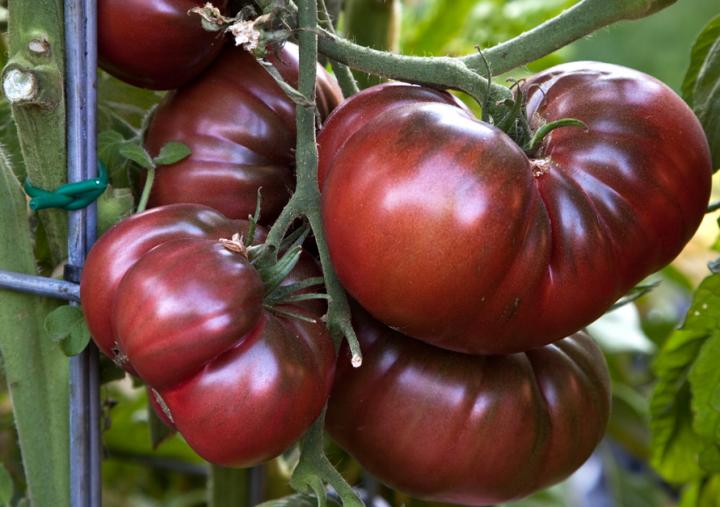
Credit: Park Seed.

More Like This

It is possible, if these are not entrance holes for insects, that they are symptoms of a disease. There are several that can cause spotting on the fruit, but one that comes to mind in particular is bacterial speck, which can appear as small raised spots on the fruit (sometimes with a yellow halo around them), which can sort of look like freckles. In the early stages, this disease only affects the skin, so you can peel it off before eating. More advanced stages will travel deeper into the tomato, so you might want to cut any discolored parts out, although a tomato affected with bacterial speck is still safe to eat. This disease likes moisture to grow, so make sure to store you fruit in a dry location. Bacterial spot and bacterial canker may be similar on fruit, but the halo is white rather than yellow (bacterial spot halos disappear in later stages). Green fruit are most susceptible to the introduction of these diseases (which also affect the leaves). Hope this helps!
Don't worry, it's a good question! In their native tropical habitat, tomatoes are perennial plants, meaning that they live and produce for more than one season. In North America, tomatoes are treated as annuals because it's hard to keep them alive through the cold part of the year (unless you have a greenhouse). If you were to cut the plant back to the roots, it's unlikely that the roots would survive to spring, as tomatoes aren't designed to go into that kind of dormancy.
If you have your heart set on keeping this plant, you could try bringing it inside your home, though you'll need to keep it above 65°F at all times (the warmer, the better) and it will need as much light as you can give it. A strong grow light will most likely be needed to keep it from withering away if you can't give it full sun.
Leave the branches; they could still put out flowers and fruit.
- « Previous
- 1
- 2
- …
- 10
- Next »

Comments