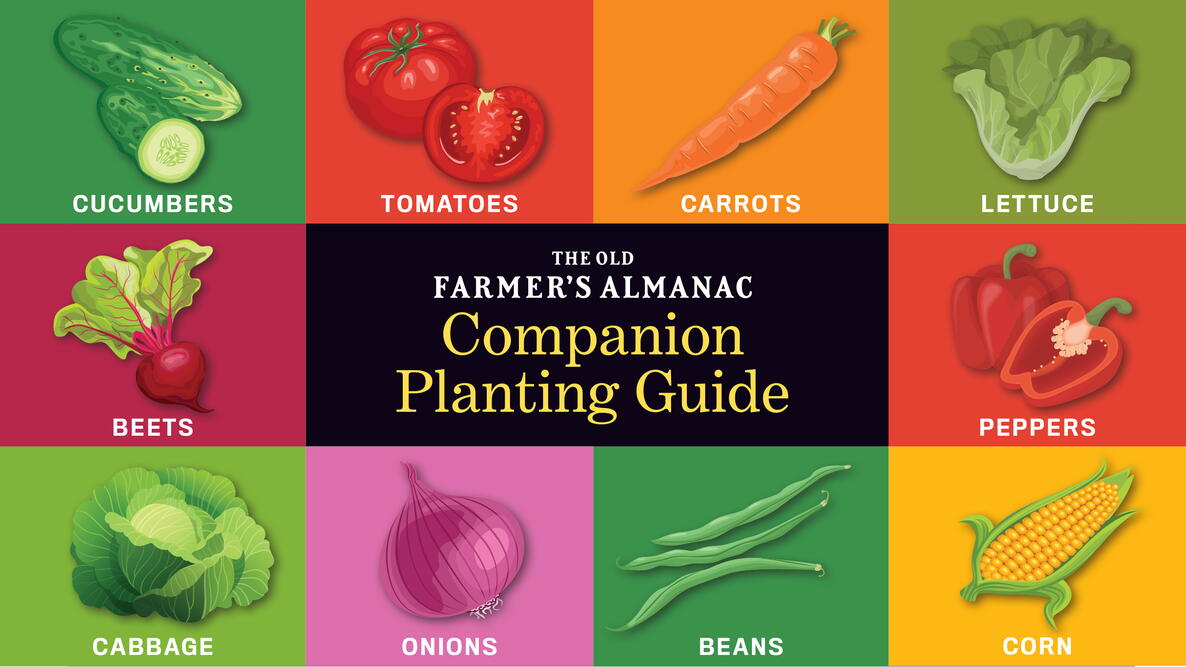
Wondering which plants grow well together? The Almanac Companion Planting Guide makes it easy to find the best vegetable pairings—and avoid combinations that can stunt growth or attract pests!
Backed by generations of gardening knowledge—and updated with modern research—this resource helps you plant with confidence and get better results. Find the best companion plants below—or download a printable version to keep on hand.
Companion Planting Chart by Vegetable
Select a vegetable to see its best companions, or scroll to browse common pairings. For more details on how and why these combinations work, see the guide below.
| Crop | Companion Plants | Benefits |
|---|---|---|
Beans | Lovage Nasturtium Rosemary Corn Sunflowers | Corn: Provides a natural trellis for climbing beans (not bush types) and improves sunlight access. USDA, NIH. Lovage: Attracts beneficial insects such as parasitoid wasps that prey on aphids and beetles. Source. Nasturtium: Acts as a trap crop, drawing pests away from beans. Source. Rosemary: Repels common garden pests with natural aromatic compounds. Source. Sunflowers: Provide structural support as a living trellis. |
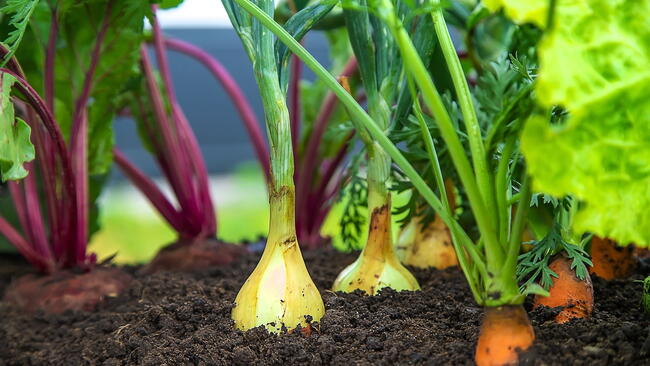
Beets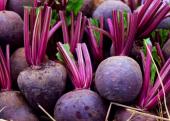 | Bush beans Garlic Lettuce Onions | Bush beans: Fix nitrogen in the soil, improving fertility. Source. Garlic: Improves beet growth and flavor. Source. Lettuce: Complements root depth and helps suppress weeds. Onions: Reduce pest pressure and improve yields. Source. |
Broccoli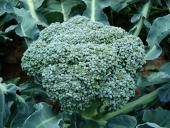 | Alyssum Dill Chinese cabbage Marigold Nasturtium Oregano Sage Thyme | Alyssum: Attracts hoverflies that prey on aphids. USDA. Chinese cabbage: Acts as a trap crop for cabbage root flies. NIH. Dill: Repels pests and attracts beneficial insects. Source. Sage: Reduces pest egg-laying. Source. Thyme and nasturtium: Reduce cabbage worm damage. Iowa State. |
Cabbage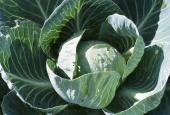 | Chamomile Dill Garlic Nasturtium Onion Rosemary Sage Tansy Thyme | Garlic: Repels diamondback moths. Source. Thyme: Disrupts egg-laying of cabbage pests. Source. |
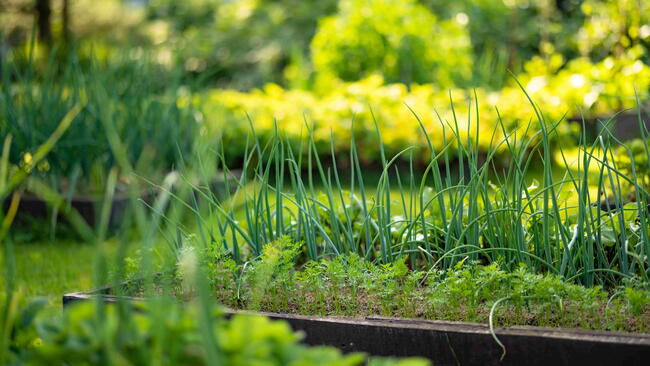
Carrots | Chives Leeks Onions Peas Radishes Rosemary Sage Savory | Onions: Significantly reduce carrot fly attacks. Source. Savory: Reduces aphids, psyllids, and nematodes. Source. |
Corn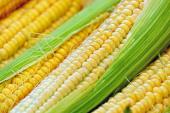 | Beans Cucumbers Dill Geranium Peas Potatoes Squash Sunflowers | Beans: Improve yield and soil fertility when intercropped. Source. Geranium: Helps control Japanese beetles. Source. |
Cucumbers | Beans Corn Dill Nasturtium Oregano Peppers Radish Sunflowers Tansy | Corn: Reduces insect pests significantly. Source. Radishes: Help repel cucumber beetles. Source. |
Lettuce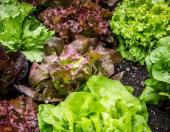 | Alyssum Chives Garlic Onion Oregano Peas Poached egg plant Radish Thyme | Alyssum: Controls aphids. USDA. Alliums (garlic, onions, chives): Mask scent and deter pests. Iowa State. |
Onions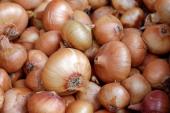 | Beets Cabbage Carrots Chard Lettuce Strawberries Tomatoes | Beets: Improve onion seed yield. Source. |
Peas | Alyssum Chives Corn Lettuce Mint Radish Spinach | Alyssum: Attracts pollinators and aphid predators. Source. |
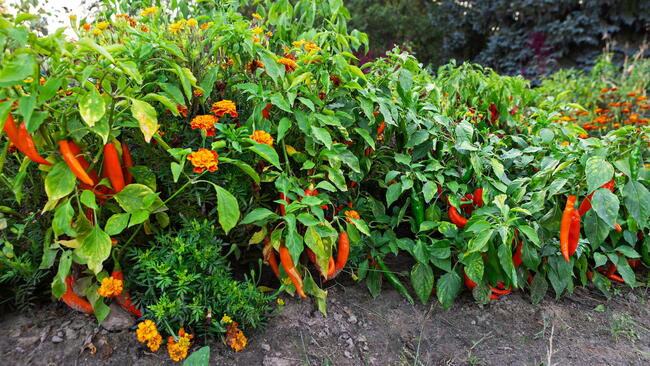
Peppers | Basil Chives Cilantro Dill Leeks Onions Oregano Rosemary | Basil: Improves growth and flavor. Dill: Supports beneficial predators. Source. |
Potatoes | Basil Beans Calendula Cilantro Dill Garlic Horseradish Onion Peas Tansy | Basil: Deters Colorado potato beetles. Source. Garlic and Onions: Repel pests. Source. |
Pumpkins / Winter Squash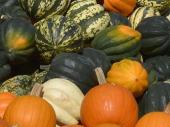 | Beans Borage Calendula Corn Lovage Marigold Nasturtium Oregano Radish Tansy | Three Sisters system: Beans fix nitrogen, corn provides support, and squash shades soil and suppresses weeds. USDA. Marigold: Helps deter squash pests. Source. |
Radishes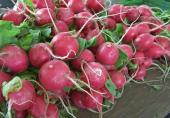 | Bok choy Chervil Collards Lettuce Nasturtium Peas Spinach | Peas: Improve soil fertility and support growth. Source. |
Spinach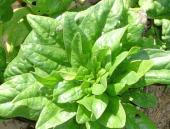 | Beans Celery Cilantro Coreopsis Peas Radish | Peas and beans: Provide shade and improve soil fertility. Source. |
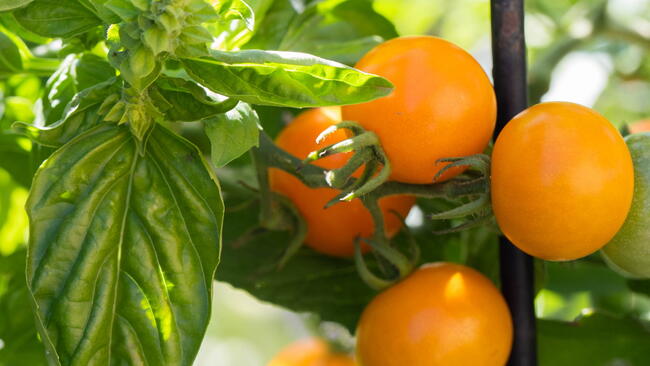
Tomatoes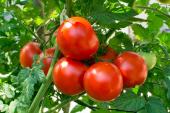 | Asparagus Basil Beans Borage Calendula Celery Marigold Parsley Radish Rosemary Thyme | Basil: Enhances growth and pest resistance. NIH. Marigolds: Reduce whitefly populations. Source. Borage: Attracts beneficial insects and pollinators. Source. |
Zucchini / Summer Squash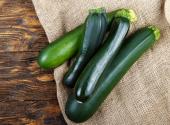 | Buckwheat Marigold Nasturtium Oregano Radish Zinnia | Buckwheat: Reduces aphids and improves beneficial insect populations. University of Florida. Marigold: Improves resistance to cucumber beetles. Source. |
Learn More About Specific Crops
Looking for more detailed companion planting advice? These crop-specific guides go deeper into plant pairings, timing, and pest control:
- Companion Plants for Carrots
- Companion Plants for Cucumbers
- Companion Plants for Basil
- Companion Plants for Peppers
- Companion Plants for Onions
Putting Companion Planting Into Practice
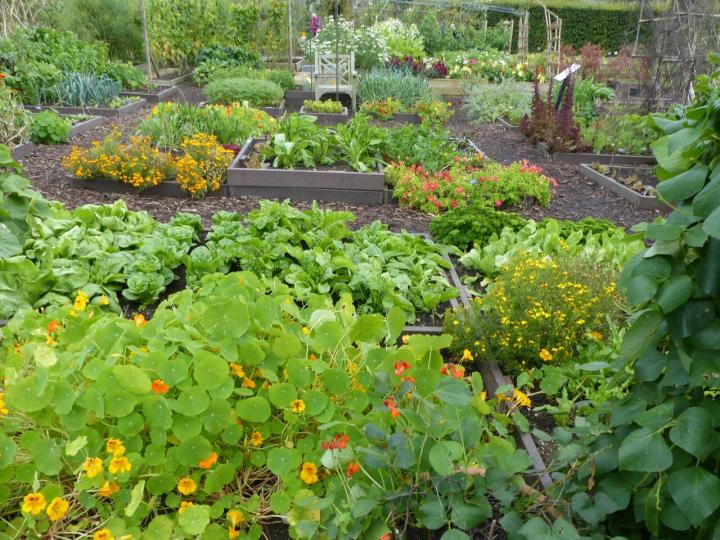
Once you know which plants grow well together, the next step is using those combinations in your garden. Companion planting works best when you mix in helpful plants that attract beneficial insects, deter pests, and support healthy growth across your beds.
These recommendations combine generations of gardening experience with research from universities and agricultural extensions.
- Alyssum: Plant near lettuce and brassicas to attract hoverflies, whose larvae feed on aphids. Source.
- Basil: Grow alongside tomatoes and peppers to help deter pests and improve plant resilience. Source.
- Dill: Add near cabbage crops or cucumbers to attract ladybugs and parasitic wasps that reduce pest populations. Source.
- Calendula or cosmos: Tuck throughout garden beds to draw in pollinators and aphid-eating insects like hoverflies and parasitic wasps.
- Borage: Plant near tomatoes and strawberries to attract pollinators and beneficial insects. Source.
- Garlic: Interplant with lettuce, cabbage, or potatoes to help repel aphids and beetles. Source.
- Mint: Place near problem areas to deter aphids and flea beetles (best grown in containers to prevent spreading).
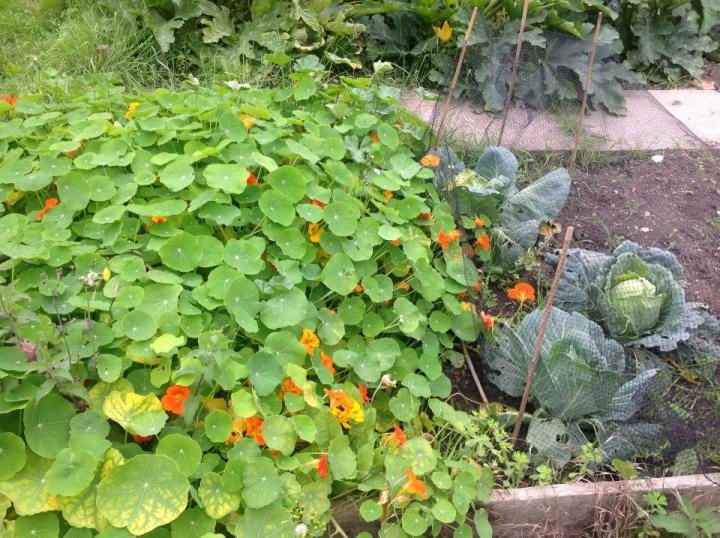
- Nasturtium: Use as a trap crop near beans and cabbage to draw pests away from your main crops. Source.
- Parsley: Plant between tomatoes to attract beneficial insects that help protect and pollinate crops.
- Poached egg plant: Grow near lettuce to attract hoverflies that control aphids.
- Sage: Plant near carrots and cabbage to help repel carrot flies and cabbage pests. Source.
- Sunflowers: Use as natural supports for climbing plants like beans and cucumbers while attracting pollinators.
- Tansy: Plant along garden edges to attract beneficial insects while repelling a wide range of pests. Source.
What Is Companion Planting?
Companion planting is the practice of growing plants together so they support one another—like a natural garden community. When thoughtfully combined, vegetables, herbs, and flowers can grow stronger and more productively.
- Some benefits are one-sided—like flowers planted near vegetables to attract pollinators.
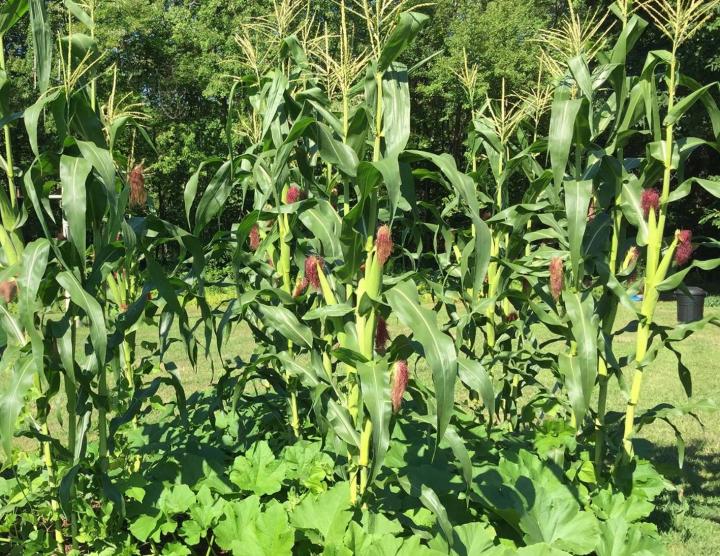
- Others are mutually beneficial, such as the classic Three Sisters: corn supports climbing beans, beans enrich the soil, and squash shades out weeds.
By combining plants that naturally support each other, you can reduce pests, improve soil, attract pollinators, and increase your harvest—while creating a healthier, more resilient garden.
Why Companion Planting Works
Companion planting works because plants interact with each other and their environment—affecting pests, pollination, and growth.
- More friends than foes: Most plant combinations are beneficial. True negative pairings are rare—black walnut trees are a well-known exception, releasing compounds that can inhibit nearby crops.
- Fewer pests: Mixing crops can confuse pests and reduce damage. USDA research shows intercropping helps limit pest outbreaks.
- More beneficial insects: Flowers like alyssum and dill attract predators that naturally control pests.
- Better pollination: Nectar-rich plants draw bees and butterflies, improving yields. Research.
- Healthier soil: Legumes such as beans and peas add nitrogen to the soil, helping neighboring plants grow stronger.
- Smarter use of space: Pairing plants with different root depths or growth habits reduces competition and maximizes your garden beds.
Simple Tips for Better Companion Planting
- Mix flowers and herbs throughout your vegetable beds to attract beneficial insects.
- Combine tall and low-growing crops to improve light use and protect sensitive plants.
- Use fast-growing crops like radishes or lettuce between slower crops to maximize space.
- Focus on soil, sunlight, and watering first—companion planting works best when basic needs are met.
- Start small: try adding marigolds, basil, or nasturtiums and observe the results.
Learn More
- See companion garden plans and layouts
- Vegetable Gardening for Beginners
- Browse growing guides for vegetables, herbs, and flowers
Companion planting helps you grow a healthier, more productive garden—working with nature instead of against it.

More Like This


Hi Sabiha,
There are many ways to setup your garden for companion planting and it really depends on the size of your garden and what you intend to grow.
You do not need to go as far as to plant companion plants directly next to each other, alternating one plant and then the other. Some methods direct you to plant alternating rows, while others only recommend planting companion plants in the corners of a garden bed. Again, it really depends on what you plan to grow and how big the plants will be.
If you are looking for some ideas for your garden space, our Garden Planner is a great tool. You can try it for free for 7 days. It is definitely a helpful resource. If you are interested, go to https://gardenplanner.almanac.com/.
Hope this helps!
Reference sources are primarily scientific studies, such as Manorama and Lal, 2010; Mei et al., 2012; Amarawardana et al., 2007; Masyad S.A et al 1999; Hooks et al 2001. This article has about 130 pages of research. If you have a more specific question about a companion pair, please contact us.
- « Previous
- 1
- 2
- …
- 10
- Next »

Comments