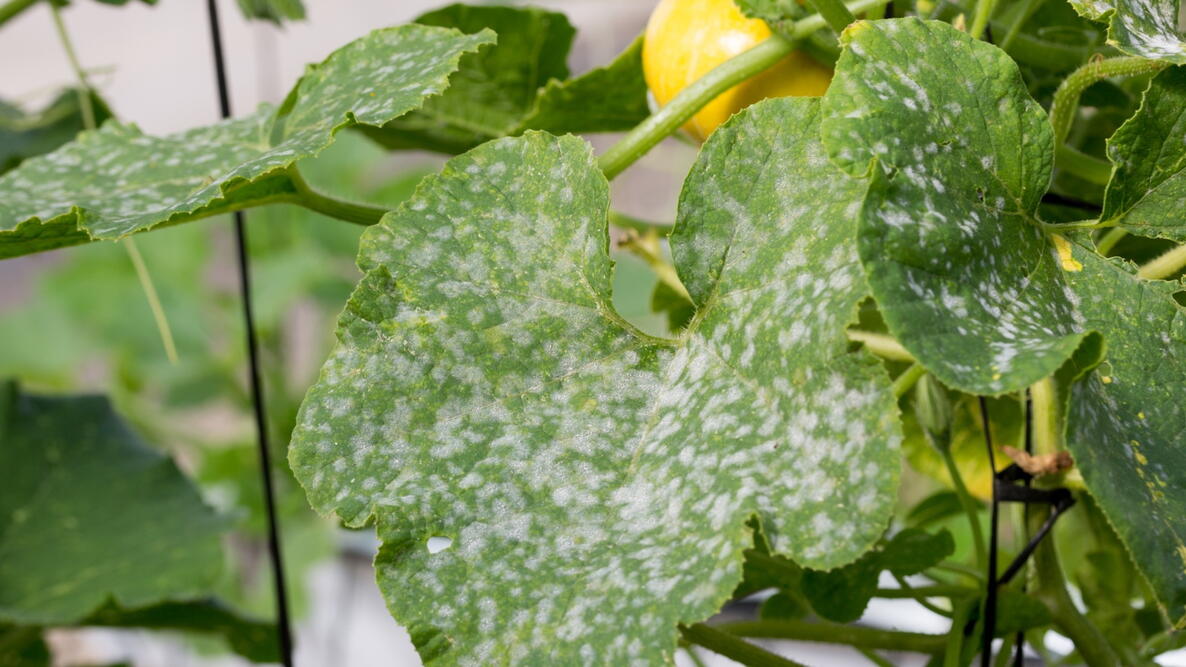
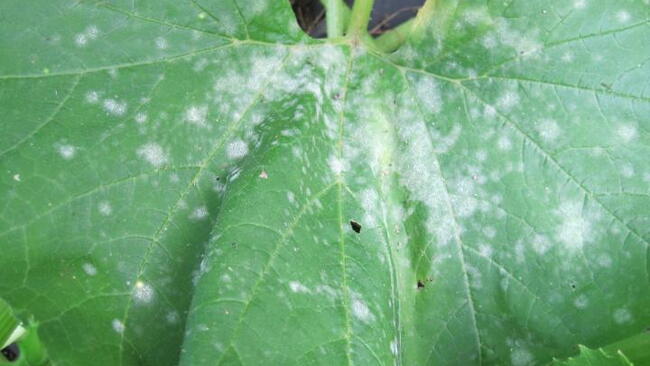
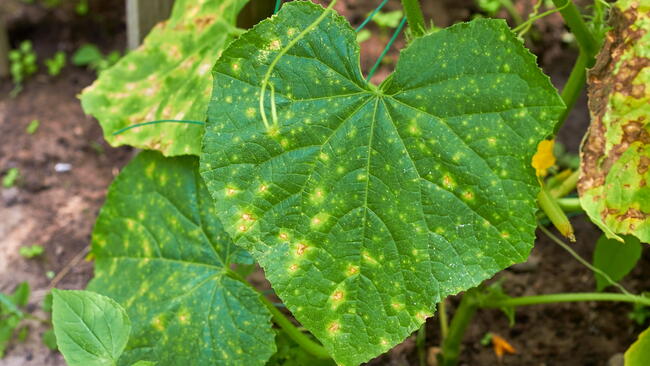
Wondering about white spots and splotches on your plants? The fungal plant disease called powdery mildew is a common problem in gardens, infecting a wide variety of plants and reducing the quality and quantity of flowers and fruit. Learn how to identify, prevent, and treat powdery mildew.
What is Powdery Mildew?
Powdery mildew is a fungal disease that affects a wide variety of plants. There are many different species of powdery mildew, and each species attacks a range of different plants. In the garden, commonly affected plants include:
When the fungus begins to take over one of your plants, a layer of mildew made up of many spores forms across the top of the leaves. These spores are then carried to other plants by the wind. Powdery mildew can slow down the growth of your plant and, if the infection is severe enough, will reduce fruit yield and quality. According to Gary W. Moorman, Ph.D., of Pennsylvania State University, “All the powdery mildew fungi are obligate parasites, requiring live tissue to grow and reproduce.”
How Does Powdery Mildew Spread?
Powdery mildew spores typically drift into your garden with the wind. Still, if you’ve had powdery mildew occur in the past, new outbreaks may also arise from dormant spores in old vegetative material or nearby weeds.
Unlike many other fungal diseases, powdery mildew thrives in warm (60°–80°F / 15°–27°C) and dry climates, though it requires fairly high relative humidity (i.e., humidity around the plant) to spread. In cooler, rainy areas, it does not spread as well, and its growth is also slowed by temperatures higher than 90°F (32°C). It tends to affect plants in shady areas more than those in direct sun.



Comments