Read Next
Planting
When to Plant Garlic
Plant garlic in fall, after the weather has cooled but before the ground freezes. In colder climates, a useful rule of thumb is to plant about 1 to 2 weeks after the first killing frost, giving the cloves time to develop roots before winter.
Garlic needs a period of cold temperatures for good bulb development. Fall-planted garlic receives this chilling naturally over winter. If you plant garlic in spring, chill the cloves in the refrigerator for about 8 weeks beforehand, then plant as soon as the soil can be worked.
In many areas, garlic goes into the ground around the same time as spring-flowering bulbs, generally from September through November. Gardeners in mild-winter climates may plant later, but spring-planted garlic often produces smaller bulbs.
Where to Plant Garlic
Plant garlic in full sun, with at least 6 to 8 hours of direct sunlight per day, and in fertile, well-drained soil. Before planting, work compost or other well-rotted organic matter into the soil to improve its structure and fertility.
Good drainage is especially important. Garlic can rot in soil that stays wet, so if you have heavy clay or poorly drained soil, consider planting in a raised bed.
How to Plant Garlic
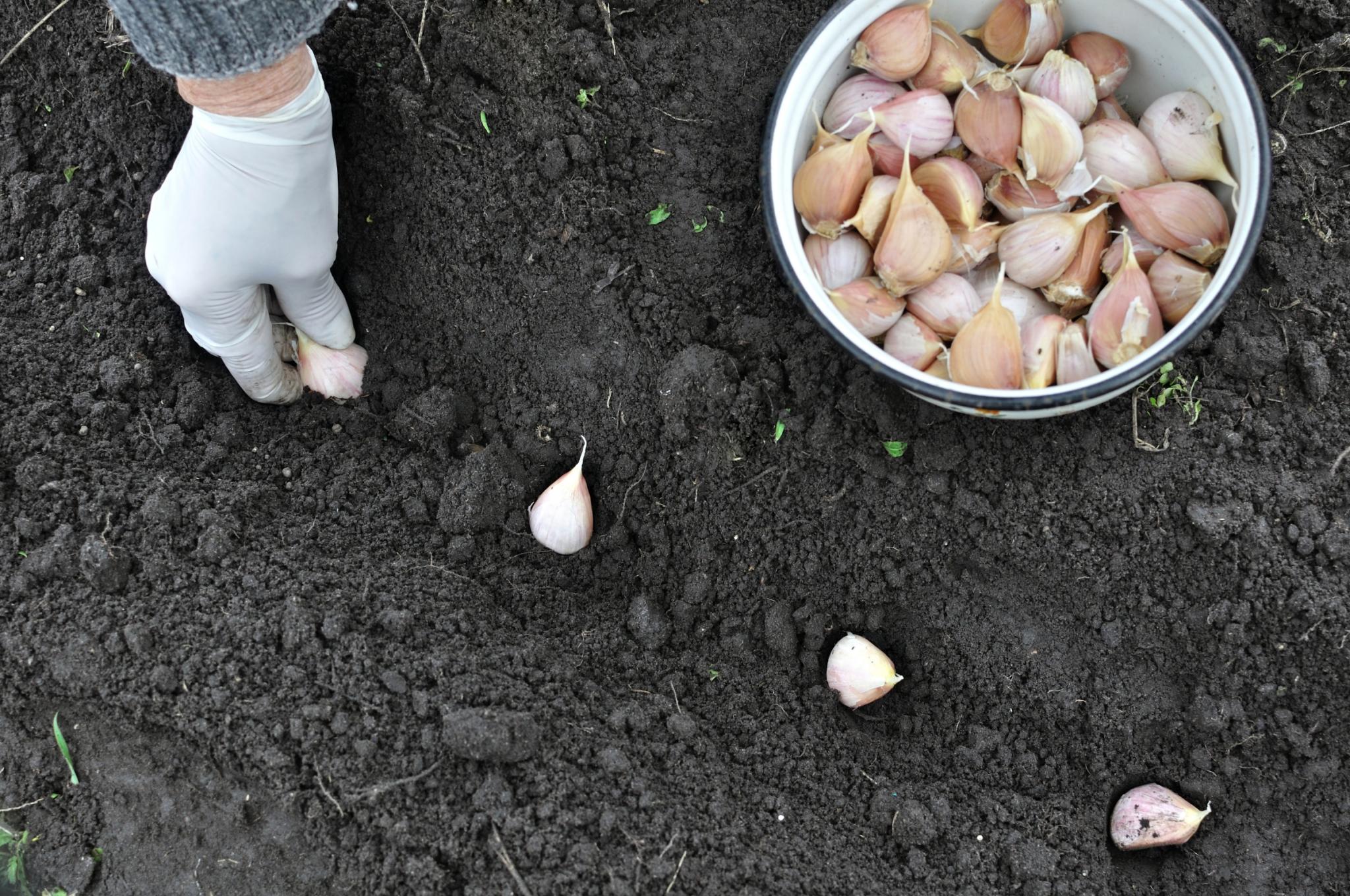
Plant garlic as individual cloves, 2 to 3 inches deep and about 4 to 6 inches apart, with the pointed end facing up. Separate the cloves from the bulb just before planting, and leave the papery skins intact.
- Start with healthy seed garlic. Choose large, firm, disease-free bulbs from a reputable nursery, garden center, or seed supplier.
- Separate the bulb into cloves just before planting. Use the largest healthy cloves and keep their papery skins on. Larger cloves generally produce larger bulbs.
- Plant each clove 2 to 3 inches deep, with the pointed end facing up.
- Space cloves about 4 to 6 inches apart. If planting in rows, leave enough room between rows for weeding and tending the plants.
- Water after planting to settle the soil around the cloves.
Types
Garlic comes in two main types: hardneck and softneck. The best choice depends largely on your climate and whether you value scapes, large cloves, or longer storage.
- Hardneck garlic is generally more winter-hardy and is a good choice for colder climates. It produces a stiff central stalk and edible scapes, with fewer but typically larger cloves. Hardneck garlic does not store as long as softneck types. Popular varieties include ‘Chesnok Red’ and ‘German Red’.
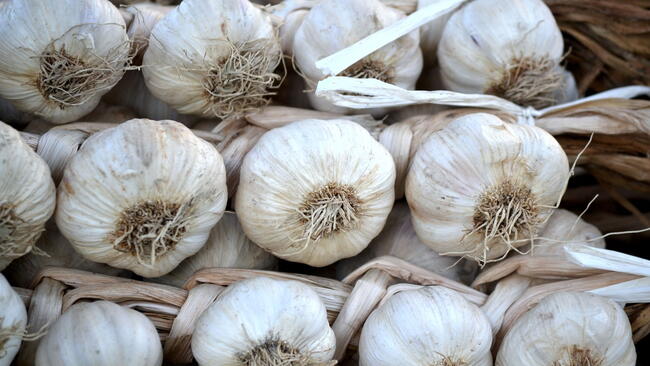
- Softneck garlic is well suited to many milder climates and generally stores longer than hardneck garlic. It usually produces more, smaller cloves and has flexible stems that can be braided after curing. Popular varieties include ‘California Early’ and ‘Inchelium Red’.
Harvesting
When to Harvest Garlic
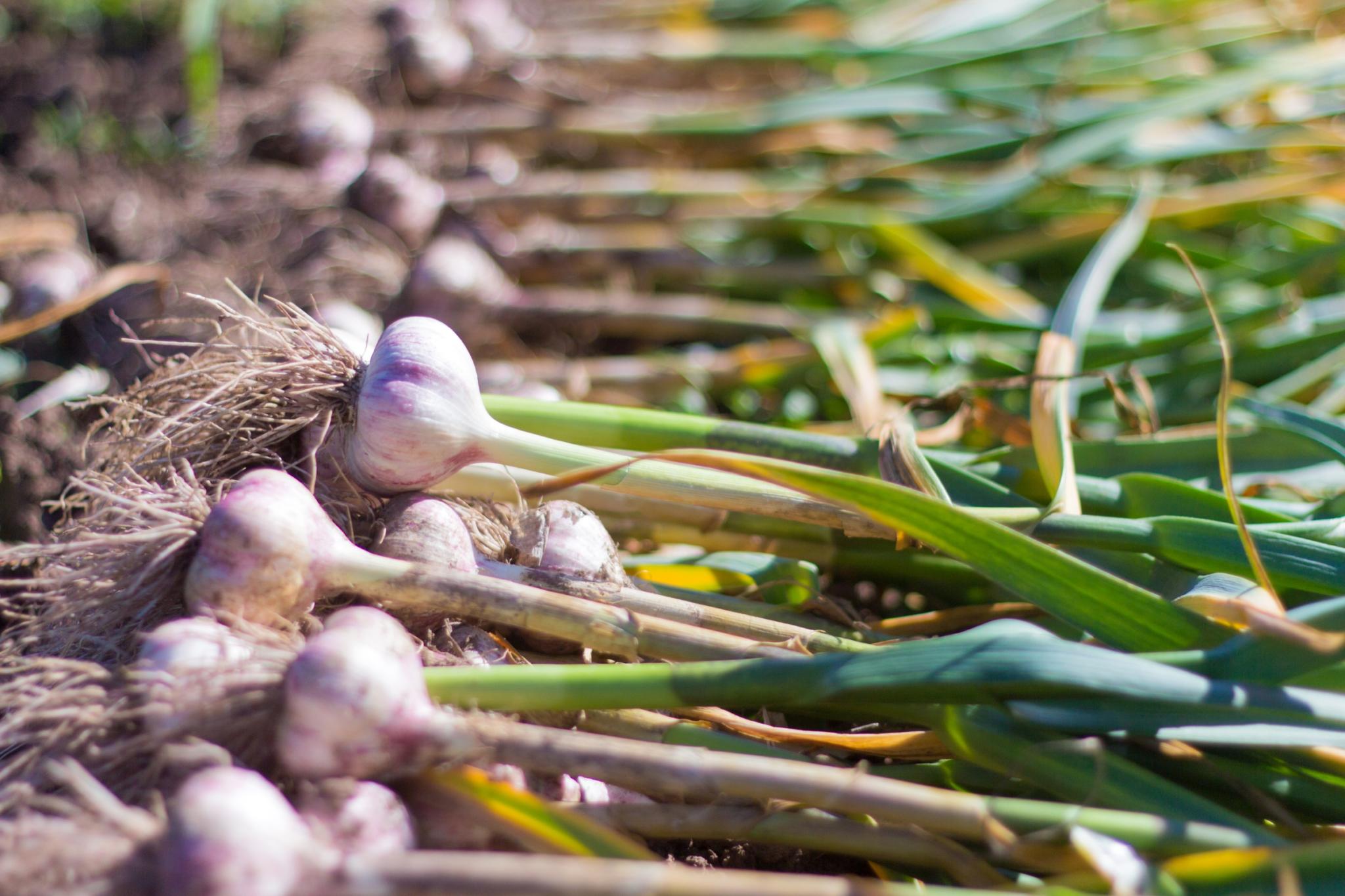
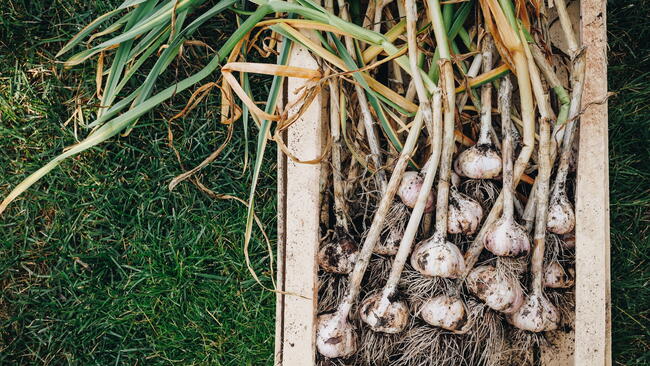
Harvest garlic when about one-third to one-half of the leaves have turned yellow or brown, while several upper leaves are still green. Don’t wait until all the foliage has dried, or the bulbs may begin to split apart and won’t store as well.
Garlic planted in fall is typically ready to harvest the following summer, usually from June through August depending on your climate and the variety. If you’re unsure, carefully dig up one bulb to check it. Mature bulbs should have plump, well-defined cloves covered by several layers of papery skin.
If you’re growing hardneck garlic for scapes, harvest the scapes earlier in the season when they begin to curl.
How to Harvest Garlic
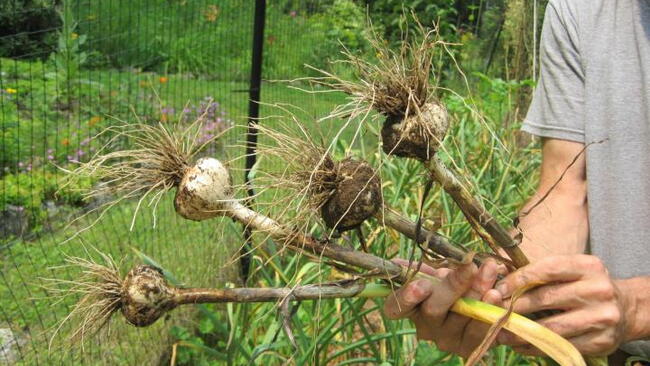
Loosen the soil around each bulb with a garden fork or shovel, taking care not to pierce or bruise it. Lift the whole plant from the soil rather than pulling hard on the stem.
Gently brush away large clumps of soil, but leave the leaves and roots attached while the garlic cures.
Storage
Garlic can be used fresh from the garden, but bulbs intended for storage should be cured first.
Place freshly harvested garlic in a warm, dry, shady location with good air circulation for about 2 to 4 weeks. Garlic is fully cured when the outer skins are papery, the neck and roots are dry, and the cloves feel firm.
After curing, gently brush away loose soil. Trim the roots and cut the stems to about 1 to 2 inches above the bulb, unless you’re growing softneck garlic and want to braid the tops.
Store cured garlic in a cool, dry, dark place with good air circulation. Softneck garlic generally stores longer than hardneck garlic.
Save a few of your largest, healthiest bulbs if you’d like to plant your own garlic again in fall.
Gardening Products


If by "seeds" you mean the bulbils at the top of the stem (that sort of look like mini bulbs) and often referred to as seeds, then yes, you can plant them in fall or spring. If you plant in spring, they will need to have a cold treatment first (place in a breathable bag in the fridge for a few weeks).
If you mean true seeds, you can save the true seeds, but they may not produce plants that are like the parent; the cloves or bulbils are what will be true to type. Not all garlic produces seeds, and those that do produce flowers, may not produce viable seed. If your seed heads are developing, but not mature, then you’ll need to sacrifice harvesting the bulb to let the seed head mature for seeds (which are harvested around October or so), or you can sever the seed stalk (scape) at the base of the plant and place it in water in a sunny location in the hope that it may still mature. It’s best to remove the bulbils early on from the scape (both bulbils and flowers will form at the top of the flower scape) to encourage better seed development from the flowers. The harvested seeds need a cold treatment before they are sown; you can place them in the refrigerator for a month or so over winter. When you sow the seeds in spring, it is likely that the germination rate will be very low for that first generation; successive generations improve. Also, that first round tends to produce problem plants, such as weaker or misshapen, but there’s also the possibility of some with desirable characteristics that you can go on to save further seed or cloves. Garlic is fussy, and has evolved so that it reproduces by cloves or bulbils more often than by seed, so propagating it this way may be a challenge, but could also be a fun experiment! Good luck!
It depends. If the cloves are soft and dried out, of course, they are of no value. Often garlic heads "sprout" or send up greens. Some say that the individual cloves in the head can be planted. Depending on the cloves' condition, you might have success—but plant a few from this year's harvest (or buy a couple of heads at a farmer's market) to know that you will have crop next year.
It all sounds ambitious and delicious, Reg! Thank you for sharing so many ideas.

It's hard to tell what you have without pictures. Often rot comes from drainage issues but it sounds like this wasn't the cause. Also, rot can happen with excessive watering after leaf development stops. Unfortunately, if you have rot, you want to pull it all or the disease spreads. And you have to avoid this soil next season. This page might help you diagnose what's going on and what to do about it. http://plantclinic.cornell.edu/factsheets/garlicdiseases.pdf
Hardneck types of garlic usually produce a flower stalk that will produce small bulblets. These are called “topsetting” garlic varieties. You can still eat these small bulbs!
- « Previous
- 1
- 2
- …
- 10
- Next »

Comments