Fall cleanup can be confusing—should you cut back your perennials or leave them standing? The truth is, not all plants benefit from a fall trim. Some need their foliage to survive the winter, while others risk disease if left untouched. In this guide, we’ll share which perennials to cut back, which ones to leave alone, and how to keep your garden healthy and full of life through the colder months.
While our annual flowers are one-hit wonders and turn black after frost, many of us wonder when to cut down different perennial plants. The guidance on “when” and “what” to cut has changed over time.
In my garden, we no longer cut down every perennial plant in the fall. As in nature, many perennials find that their dying leaves protect them from the cold and provide natural fertilizer. Plus, the plant stems are good for pollinators.
Perennials NOT to Cut Back
Technically, very few plants MUST be cut down in the fall. And never rush to cut things down; hold off until after several hard frosts. Even if the flowers or leaves are dead, the roots reclaim energy from the dying plant for healthy growth in the spring.
We enjoy leaving as many flower seedheads standing as possible to add winter interest and feed the birds in cold weather. If you follow nature’s lead, the decomposing leaves not only insulate the plant during the winter freezes and thaws but also decompose to provide excellent (and free) fertilizer, saving you time and money in the spring.
Plus, particular perennials should be left alone. This list includes:
- Evergreen perennials such as epimediums, hellebores, heucheras, hardy geraniums, dianthus, moss phlox, and euphorbias
- Candytuft, primulas, hens & chicks, heaths, and heathers (considered evergreen and should not be cut back in the fall). Tidy them in the spring as needed.
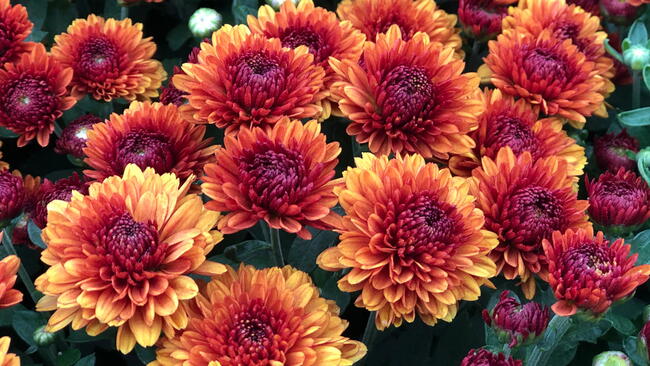
Also, do not cut back hardy perennials like garden mums (Chrysanthemum spp.), anise hyssop (Agastache foeniculum), red-hot poker (Kniphofia uvaria), and Montauk daisy (Nipponanthemum nipponicum). Leave the foliage. It’s important to protect the root crowns over winter. Cutting back the plants severely will stimulate late new growth, which will be very susceptible to winter kill.
Pulmonaria and penstemons should also be left in place until spring.
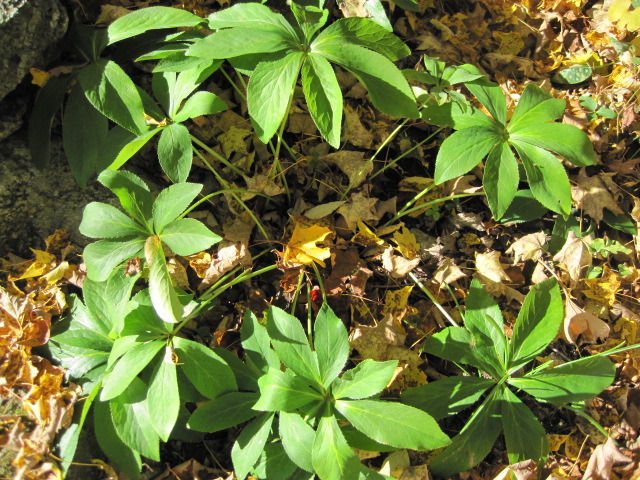
Always cut back on any infected or diseased plants! Badly damaged or infested foliage should be cut back and removed from infected plants.
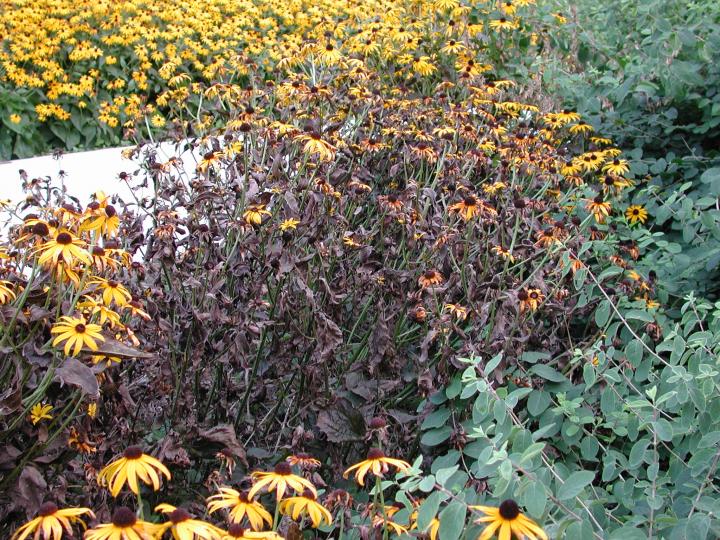
Credit: Purdue University.
Which Perennials to Cut Back
However, some perennial plants are more susceptible to problems if the old foliage and dying stems are left to rot. Diseases can overwinter in dead foliage, as can slugs and other pests. Old stems can also get battered about by fall and winter winds, which will damage the plant’s crown and roots.
Specifically, there is a small handful of perennials that we recommend cutting back in the fall, namely:
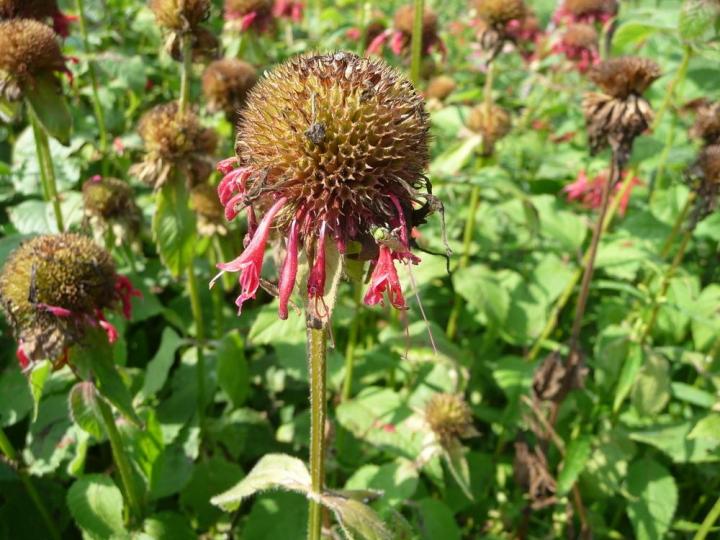
- Bee balm and phlox are prone to powdery mildew, so cut them back once the flowers finish.
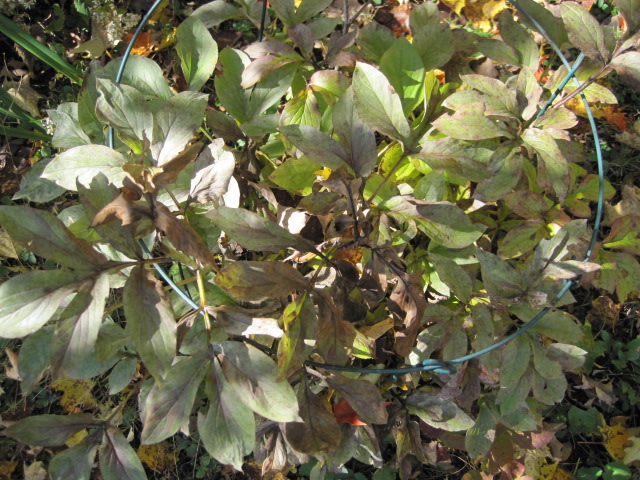
- Peonies to keep fungal diseases from spreading. Gather a handful of stems and cut them off 2 to 3 inches above the soil.
- Hosta foliage after a hard frost, including any leaves on the ground, as they may harbor slug eggs and prevent new spring growth. Don’t cut the leaves to the ground, though. Instead, leave about 2 to 3 inches of each stem standing to protect the crown during winter.
- Bearded irises need a clean garden bed to stay disease-free. The iris borers’ eggs overwinter on the leaves and stems of the mother plant; by cutting the leaves back and destroying them, you can help reduce or even eliminate borers from your garden. Wait until after the first frost because the iris borer moth remains active until then.
If it bothers you to keep the dead and dying perennials standing in your garden bed, see this list of perennials that can be cut down in the autumn. Most plants that flower in early spring or summer can be cut down in the fall.
- Artemisia
- Bearded iris
- Bee balm
- Campanula
- Catmint
- Clematis
- Columbine
- Coreopsis
- Delphinium
- Daylily
- Hardy geranium
- Peony
- Phlox
- Salvia
- Shasta Daisy
- Sunflower
- Veronica
- Yarrow
How to Cut Back Perennials
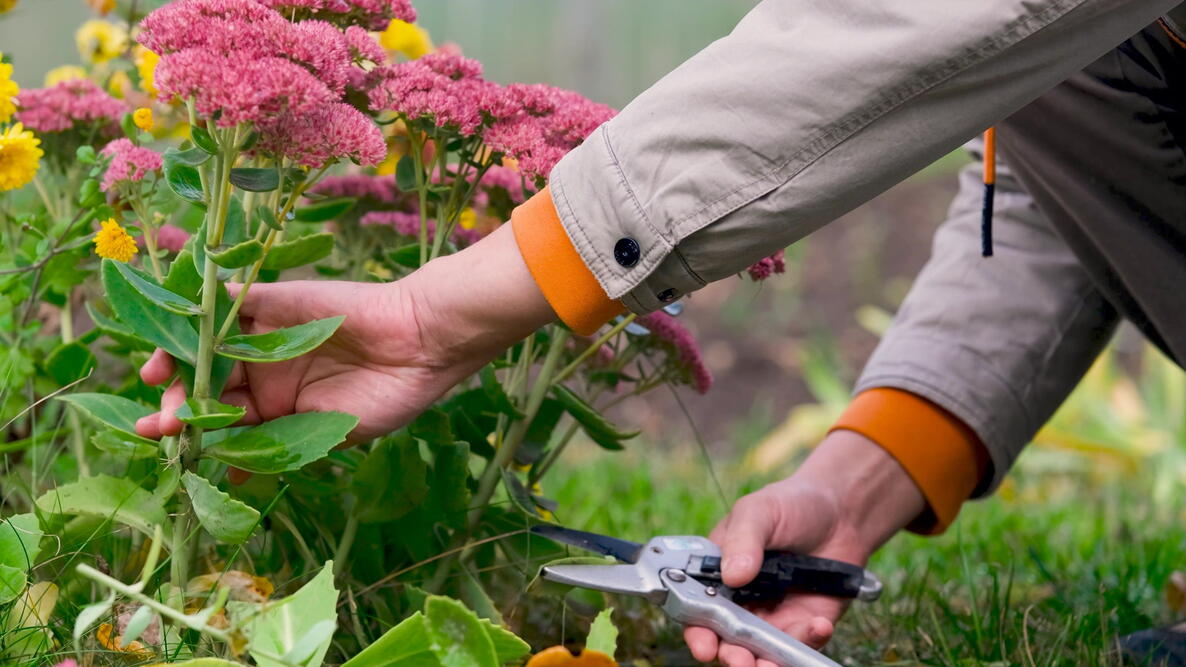
After several hard frosts, remove spent flowers and stems by cutting stems off near the base of the plant, allowing the crown (base of the plant) to remain. Bypass pruners are preferred because they make a clean cut through the plant’s stem, whereas anvil pruners crush the stem, leaving more damage behind.
I usually leave 6-inch stubs so I can find the plants next spring. Don’t go any lower than 2-inch stubs; you don’t want to accidentally dig into plants that emerge late, like butterfly weed, rose mallow, and balloon flower. You will be less likely to dig into them accidentally before they appear in spring if you can see some of their stalks.
Note: Some late summer or fall perennials and biennials may have already started to form leaves for next year at the base of the plant. Examples include yarrow, foxglove, Shasta daisy, and globe thistle. When cutting back, be sure to leave these rosettes of green. Cut off the stalks without disturbing this new growth.
After cutting back your plants, apply a light mulch. Then, wait to feed until the spring for healthy growth.
Don’t Be Afraid to Leave Some Winter Interest!
Again, try leaving some seedheads standing for winter interest or to feed the birds. Here are some favorites:
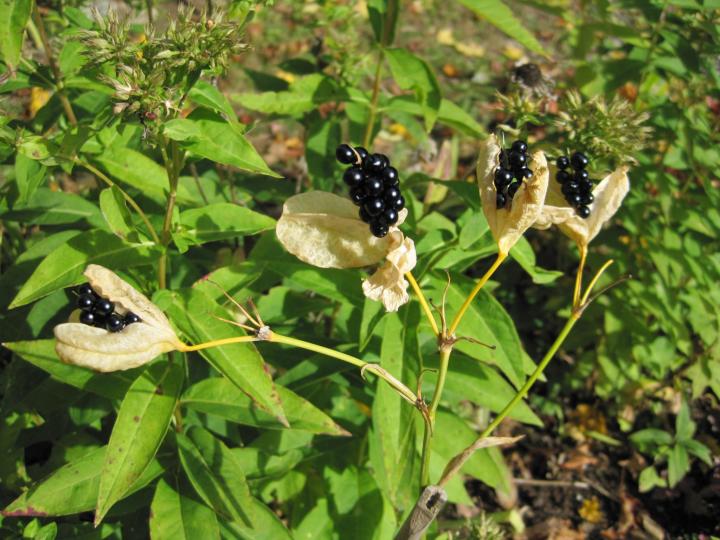
- The blackberry lily (Belamcanda) looks great until heavy wet snow finally knocks it down.
- Ornamental grasses add movement and sound to the landscape.
- I let the agastaches, coneflowers, and rudbeckia stand through winter for the birds to enjoy. See plants with seedheads to feed the birds.
- Native sedum, Joe-pye weed, and oxeye sunflower (Heliopsis helianthoides) can all wait until spring to be cut back, when new growth arrives. In addition to the birds, butterflies and beneficial insects shelter in these native plants and their leaf litter.
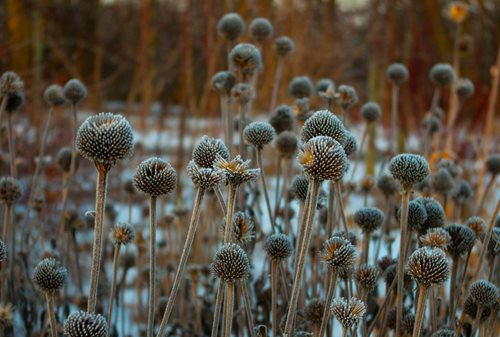
If you don’t want certain plants to reseed, snip spent flowers back just below the mound of foliage for a tidy look. Perennials that will self-seed include:
- Purple coneflower (Echinacea)
- Black-eyed Susan (Rudbeckia)
- Blanket flower (Gaillardia)
- Globe thistle (Echinops ritro)
- Solomon’s seal (Polygonatum)
Clean Up Garden Debris
As with the vegetable garden, any diseased or bug-infested plant material needs to go—far away! Please don’t put it in the compost pile. Debris from rusty hollyhocks, peonies with powdery mildew, leaf-spotted delphiniums, and other fungal-infected flowers should be removed from the garden.
Don’t Fertilize in the Fall
Fertilizing in autumn encourages new growth that will get killed when cold weather hits. Compost is not considered a fertilizer; it is a soil conditioner, so feel free to add that in the fall. If your soil test indicates that you need lime, it can also be applied in the fall.
Weed Before the Freeze
Before the ground freezes, do a final weeding. The more weeds you can get out now, especially those with seeds, the fewer weeds you’ll have to deal with in the spring. Edge your beds for one last time, and you’ll start the year with a neat, tidy look.
To Mulch or Not to Mulch?
If you are growing hardy plants in your zone and live where snow cover is plentiful each winter, you probably don’t have to worry about mulching your garden, though it’s always insurance to give them extra protection. It’s newly planted perennials that are the exception. Tuck some mulch around them for their first winter.
The purpose of a winter mulch is to keep the soil temperature even and prevent the heaving of roots due to alternate freezing and thawing of the ground. Waiting until the ground is frozen before mulching is best for your plants and discourages rodents from making a cozy home there. Use a mulch that does not pack down and smother your plants. Shredded leaves, pine needles, straw, or evergreen boughs are good choices. Snow provides the best insulating mulch; it goes down gradually and melts gradually.
Learn more about mulching your garden.
Watering the Garden
If you live where it has been dry this growing season, keep watering your garden until the ground freezes. Usually, there is plentiful moisture in the fall, but many areas have experienced drought conditions in recent summers, and the ground is dry. Water-stressed plants will have a tough time surviving the winter.
The more work you do in your perennial garden this fall, the less you’ll have to do next spring!
See more about overwintering plants in the garden—from roses to rosemary.

Getting Started with Flower Gardening
Building a Raised Flower Bed Garden
Choosing Flowers
Types of Flower Gardens
Growing Flowers in Containers
Spring and Fall Bulbs
Caring for Flowers
More Like This
Comments

Your hardy lavender shouldn't need any special care to get it through the winter. Snow is a good insulator. If there is no snow in your area, add a layer of straw mulch to the roots to protect them. Wait until spring to do any pruning.
Clematis virginiana can be pruned at anytime. Do it in the fall to remove the tangle of vines or wait until spring to cut it back to about a foot or 2 from the ground to encourage bushy growth. Forsythia should be pruned after it has finished flowering in the spring. This will give it plenty of time to set buds for next year's flowers. The move to a sunnier location should greatly improve its flower production. Did not mention forsythia since this article was about perennials and not shrubs!
Sorry Megan but I only mentioned penstemon one time to say it is not necessary to cut them back in the fall. If yours have some kind of disease then by all means cut the old stalks and foliage off and remove it from the garden otherwise leave them alone til spring.

Strawberries do not like winter weather; the plants should be mulched in fall before temperatures drop below +20 F. However, allow the strawberry plants to harden or acclimate to cool fall temperatures before mulching the planting. Plants that are mulched prematurely are more susceptible to winter injury than those that are mulched after they have been properly hardened. Excellent mulching materials include clean, weed-free oat, wheat or soybean straw. Chopped cornstalks are another possibility. Leaves are not a good winter mulch for strawberries. Leaves can mat together in layers, trapping air and creating space for ice to form. The leaf, air and ice layers do not provide adequate protection. Leaf mulch actually may damage plants due to excess moisture trapped under the material. The depth of the mulch should be 3 to 5 inches at application. The material should eventually settle to 2 to 4 inches. In windy, exposed areas, straw mulches can be kept in place by placing wire or plastic fencing over the area. The fencing can be held in place with bricks or other heavy objects.
Another option is a strawberry pyramid, a type of raised bed. In winter, temperatures in raised beds may be several degrees colder than ground level plantings. Because of colder temperatures, strawberry plants growing in raised beds require more protection that ground level sites. Place 6 to 8 inches of straw or chopped cornstalks on strawberry pyramids or other raised beds in fall.
- « Previous
- 1
- 2
- …
- 10
- Next »

I have had a bad experience using fresh sawdust and would not recommend it. Is there a place you can dump it and let it sit for a year or so to begin decomposing? After it has composted it will not suck so much nitrogen from your soil. Composted sawdust is a good mulch for acid-loving plants such as blueberries and rhododendrons. Don't use it fresh unless you are prepared to add nitrogen fertilizer to offset any depletion.